
OCD can become more persistent with age, especially when patterns continue without interruption and responses to intrusive thoughts stay the same. The condition itself does not automatically worsen, but repeated cycles can make symptoms feel stronger and harder to manage.
This does not mean things will keep getting worse. With the right approach, many people are able to ease the intensity of symptoms and feel steadier in how they respond.
This article looks at how OCD can change with age, what contributes to these shifts, and practical ways to adjust your response and regain a sense of control.
What untreated OCD looks like

Untreated OCD appears as ongoing cycles of intrusive thoughts and repetitive behaviors that feel difficult to control and interfere with daily life.
These intrusive thoughts are persistent and unwanted, creating anxiety or discomfort. In response, individuals perform compulsions such as checking, cleaning, or mentally reviewing situations to reduce that distress.
Compulsions may take up a significant amount of time each day and can become automatic responses rather than intentional actions. While they may provide short-term relief, they reinforce the cycle and keep the pattern going.
Avoidance is another common feature. Situations, places, or responsibilities that trigger obsessive thoughts may be avoided, which can limit daily functioning and reduce independence.
Some compulsions are less visible but still disruptive. Mental behaviors such as repeating phrases, counting, or replaying past events are used to seek reassurance, keeping the cycle active even without outward actions.
How untreated OCD can worsen with age
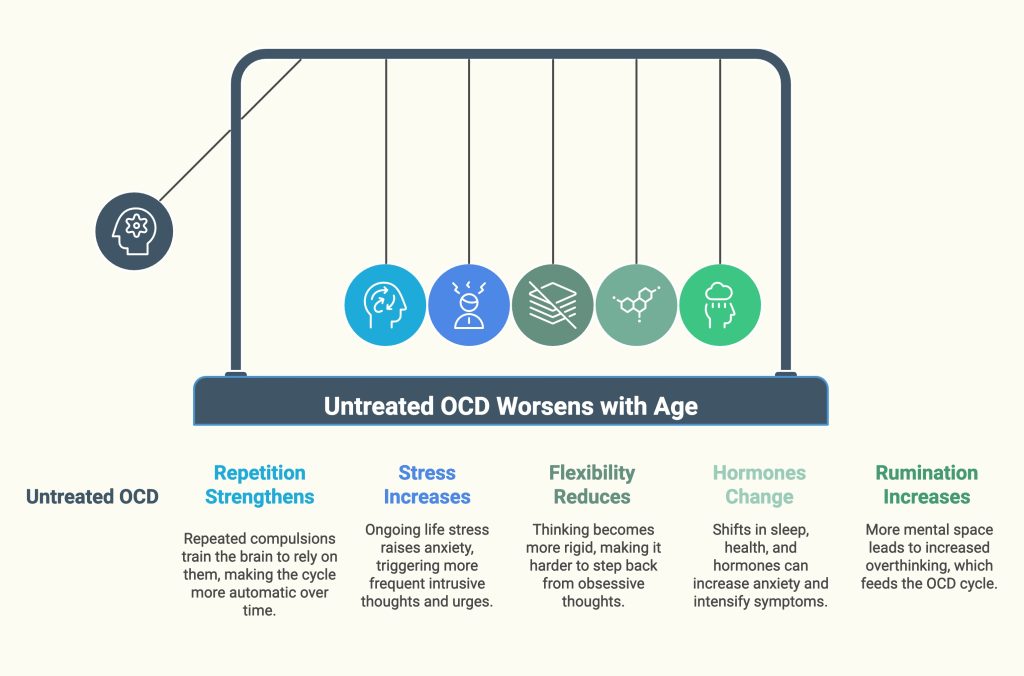
Untreated OCD can worsen over time as repeated compulsions reinforce patterns, thinking becomes more rigid, and long-term stress increases overall symptom intensity.
Repetition strengthens the pattern
Repeating compulsions teaches the brain that this is the way to respond to discomfort or uncertainty. Each time the behavior is repeated, the connection between the thought and the action becomes stronger, making it more likely to happen again the next time a similar thought appears.
Stress from life transitions
As people get older, life brings more responsibilities such as career demands, financial pressure, and health concerns.
These ongoing stressors can raise overall anxiety levels, causing intrusive thoughts to appear more frequently and making compulsions feel more intense and harder to resist.
Reduced cognitive flexibility
As patterns continue, it can become more difficult to step back from intrusive thoughts or see them from a different perspective. Thoughts may start to feel more convincing or urgent, which makes it easier to fall into the same response without questioning it.
Hormonal and biological changes
Changes in the body across different stages of life can affect mood and anxiety levels, which are closely linked to OCD symptoms.
As you age, shifts in hormones, sleep patterns, and overall health can increase anxiety, making thoughts feel more persistent and behaviors more necessary to reduce discomfort.
Increased time for rumination
Later in life, or during slower periods, there may be fewer distractions. More mental space can lead to more overthinking, which gives OCD more room to repeat its cycle.
Why OCD symptoms can fluctuate over time

OCD symptoms can fluctuate over time because they are influenced by changes in stress, routines, and how the brain responds to intrusive thoughts.
Increased stress levels
Higher stress levels make the brain more alert to potential threats, which can increase how intrusive thoughts appear and how strong the urge to perform compulsions feels.
Changes in daily routine
Less structure in daily routines can create more space for intrusive thoughts to take over. Consistent routines, on the other hand, help limit how much attention those thoughts receive.
Sleep and mental fatigue
Poor sleep or mental fatigue makes it harder to shift attention away from intrusive thoughts. This can make compulsions feel more automatic and difficult to resist.
Shifts in coping and habits
Using coping strategies consistently can reduce symptom intensity, while stopping or changing these habits can allow symptoms to increase again.
Natural variation in symptoms
OCD does not follow a fixed pattern, so symptoms can improve during stable periods and increase during times of stress or disruption.
How people overcome Obsessive Compulsive Disorder?

People overcome obsessive-compulsive disorder by changing how they respond to intrusive thoughts and reducing reliance on compulsions. This involves a mix of daily strategies and structured treatment when needed.
Evidence-based treatment approaches
Evidence-based treatment approaches for OCD focus on reducing the cycle between intrusive thoughts and compulsive behaviors.
These approaches are structured, consistent, and designed to change how individuals respond to thoughts rather than eliminate them. Treatment typically combines behavioral strategies, cognitive techniques, and, in some cases, medication support.
Daily coping strategies that reduce compulsions
Delaying a compulsion by 5 to 10 minutes weakens the automatic response and builds tolerance to discomfort. Limiting reassurance-seeking reduces dependence on external validation, while shifting attention to simple actions helps interrupt repetitive mental loops.
Mindset shifts that break the ocd cycle
Accepting uncertainty reduces the need to resolve every intrusive thought, which directly weakens OCD patterns. Learning to observe thoughts without reacting to them lowers their intensity and prevents escalation into compulsions.
What to avoid when managing ocd
Trying to suppress or eliminate intrusive thoughts makes them more persistent and distressing. Repeated reassurance-seeking can also reinforce the cycle, making symptoms more frequent and harder to manage over time.
What therapies are helpful for OCD

The most effective therapies for OCD are Exposure and Response Prevention (ERP), Cognitive Behavioral Therapy (CBT), Acceptance and Commitment Therapy (ACT), and medication, which work together to reduce intrusive thoughts and compulsive behaviors.
These approaches target different parts of the OCD cycle and are often used together:
- Exposure and Response Prevention (ERP): This approach reduces the link between intrusive thoughts and compulsions by gradually facing triggers while not performing the usual responses.
- Cognitive Behavioral Therapy (CBT): CBT helps identify how thoughts influence behaviors and provides tools to challenge and reframe unhelpful thinking patterns.
- Acceptance and Commitment Therapy (ACT): ACT focuses on allowing thoughts to exist without reacting to them, which reduces the urge to engage in compulsions.
- Medication support: Selective serotonin reuptake inhibitors can reduce symptom intensity and make it easier to apply therapy-based strategies consistently.
Get control over OCD no matter your age
OCD gets worse with age when patterns repeat without interruption, but change remains possible at any stage. Progress comes from learning how to respond differently to intrusive thoughts and reducing the behaviors that keep the cycle active.
This is where structured treatment makes a measurable difference. Get a free consultation to work with clinicians who specialize in anxiety disorders and provide focused, practical care tailored to your needs.
Frequently asked questions
How to tell if OCD is severe?
OCD is severe when it takes more than one hour daily, disrupts work or relationships, and feels uncontrollable. Intensity also shows through high distress levels, frequent compulsions, and increasing avoidance of normal activities.
Why does OCD get worse as you get older?
OCD can worsen over time when repeated compulsions strengthen habits and increase automatic responses. Life stress, reduced cognitive flexibility, and major transitions can also raise baseline anxiety, making symptoms more persistent and harder to interrupt.
Does ocd ever go away?
OCD does not disappear completely, but it can become highly manageable with the right strategies. Many people reduce symptoms significantly and regain control through consistent practice, structured approaches, and long-term habit change.
What triggers OCD flare-ups?
OCD flare-ups are triggered by stress, major life changes, lack of sleep, or increased uncertainty. These factors raise anxiety levels, which can intensify intrusive thoughts and make compulsions feel more urgent.
Can you live a normal life with OCD?
Yes, many people live stable, productive lives while managing OCD symptoms effectively. With consistent strategies and support, intrusive thoughts become less disruptive and daily functioning improves significantly.