
Are these thoughts just overthinking or something more repetitive? When you’re stuck in a loop, it rarely feels simple or easy to explain.
The short answer is this: learning how to break the cycle of obsessive thoughts is not about stopping the thoughts themselves. It is about how you respond when they show up.
Intrusive thoughts can feel urgent even when they are not dangerous. Trying to figure them out often keeps the cycle going.
Let’s take a closer look at how this cycle works.
What obsessive thoughts actually are

Obsessive thoughts are repetitive, intrusive mental events that are difficult to dismiss, even when they do not reflect your values or intentions. In more persistent patterns, these thoughts can occur dozens of times per day and create ongoing distress that interferes with focus and daily functioning.
Why they feel urgent and hard to ignore
Obsessive thoughts activate the brain’s threat-detection system, creating a false alarm that signals danger even when none is present. This response increases attention and emotional intensity, which makes the thought stand out and feel more important than it actually is.
Why trying to figure them out can backfire
When you analyze or debate a thought, the brain treats it as important. Repeating this response strengthens the pattern, increasing both the frequency of the thought and the urge to engage with it rather than resolve it.
What keeps the cycle of obsessive thoughts going

The cycle is not driven by the thoughts themselves. It is by how you respond to them. Certain habits can unintentionally reinforce the loop and make it harder to disengage.
Reassurance seeking
Seeking reassurance may reduce anxiety briefly, but the relief often lasts only minutes or hours. This pattern can train the brain to depend on it, leading to more frequent intrusive thoughts.
Mental checking and reviewing
Mental checking often happens quietly in the background and can take up more time than you realize. It usually includes:
- Replaying past conversations to check if something was wrong
- Analyzing actions to feel certain nothing bad happened
- Checking internal feelings to confirm you feel “right”
- Going over the same thought repeatedly to find a clear answer
In more persistent patterns, this can take 1 to 3 hours per day, increasing mental fatigue and making the cycle harder to break.
Avoidance, rituals, and “just in case” habits
Avoidance and rituals are actions you take to reduce discomfort or prevent something bad from happening, even when there is no real danger.
This can look like avoiding certain places or situations that trigger the thought, repeating actions like checking or rereading, or doing things in a specific way to feel “safe” or complete.
How to stop feeding obsessive thought loops
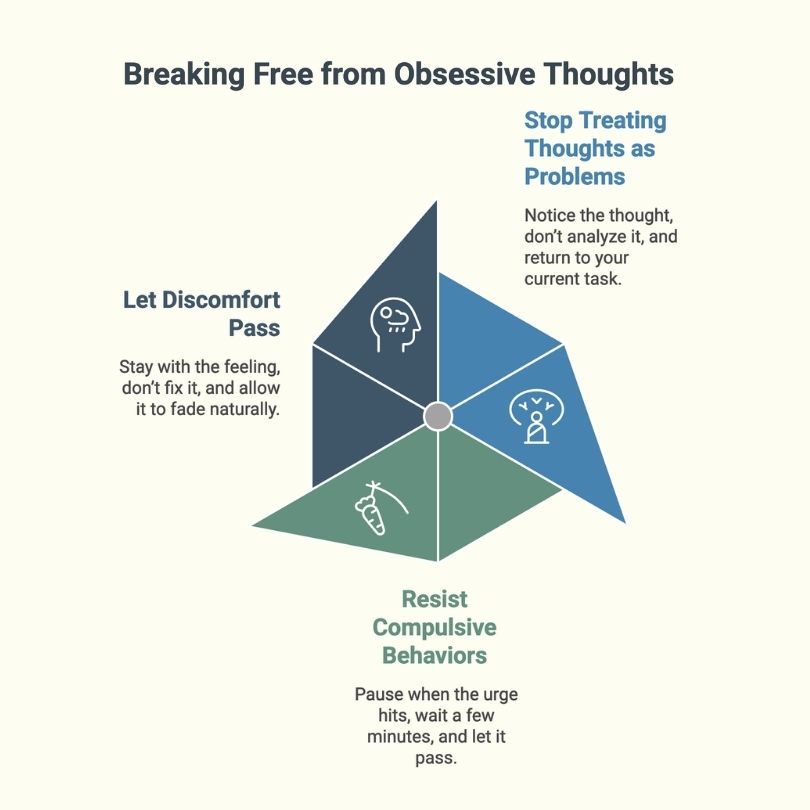
Breaking the cycle means changing your response, even when it feels uncomfortable at first. It focuses on reducing the behaviors that give the thoughts their power.
Stop treating every thought like a problem to solve
Not every thought needs an answer. When one shows up, notice it and return to what you were doing instead of figuring it out. This helps the brain see it as less important.
Resist the urge to check, confess, or get certainty
The urge to feel sure can be strong, but acting on it keeps the cycle going. Try delaying the urge and let it pass without checking. This helps your brain learn that it can handle uncertainty.
Let discomfort pass without doing a ritual
Anxiety rises and falls on its own. Stay with the feeling without doing anything to fix it, and give it time. This shows your brain that the discomfort will pass without a ritual.
When obsessive thoughts may point to OCD

Not all intrusive thoughts indicate OCD, but certain patterns suggest a more structured condition. These include repetitive thoughts, strong urges to check, and distress that starts to affect daily life.
Repetitive themes that keep returning
If the same types of thoughts keep coming back, it can point to a pattern beyond general anxiety. These often show up as:
- Thoughts about harming yourself or others, even when you don’t want to
- Fears about contamination, germs, or getting sick
- Doubts about relationships, like questioning if something feels “right”
- Worries about doing something wrong or being a bad person
When these themes repeat daily or multiple times a day, they tend to follow the same pattern rather than changing randomly.
Relief that never lasts
Temporary relief followed by recurring distress is common. This cycle can repeat many times per day without long-term resolution.
Daily life starts shrinking around the thoughts
When routines, decisions, or relationships begin to revolve around avoiding thoughts or reducing anxiety, the cycle may be limiting normal functioning.
If these patterns are showing up often or starting to affect your daily life, it may be helpful to talk with a therapist who understands OCD.
Start breaking the cycle for good
Breaking obsessive thought cycles comes from changing how you respond, not from trying to remove the thoughts themselves. With steady practice, the intensity can ease, and the thoughts begin to take up less space in your day.
This shift is gradual. Each time you choose not to engage, check, or solve the thought, you interrupt the cycle and give your brain a chance to learn a different response.
If these patterns are taking up your time or making it harder to focus, it may help to talk it through. Get a Free 20-Minute Consultation with us to start working on a more steady way to respond.
Frequently asked questions
How can I tell if obsessive thoughts are becoming a cycle?
Obsessive thoughts become a cycle when they repeat frequently and lead you to respond in the same way each time. If checking, avoiding, or seeking certainty starts happening daily, the loop is likely active.
Why do obsessive thoughts feel so hard to stop?
Obsessive thoughts feel hard to stop because the brain treats them as important signals that need attention. The more you engage with them, the stronger they feel, and the more often they return.
How can I stop overthinking and obsessive thoughts without making them worse?
You stop overthinking by changing your response, not by forcing thoughts away. Let the thought be there without trying to solve it, and return to what you were doing, even if it feels uncomfortable.
When do obsessive thoughts point to OCD?
Obsessive thoughts may point to OCD when they are persistent, repetitive, and lead to behaviors aimed at reducing anxiety. If they take up significant time and interfere with daily life, structured support may help.
What treatment can help break obsessive thought loops?
Exposure and Response Prevention is the most effective approach for breaking obsessive thought loops. It helps you face the thought without doing the usual response, which gradually weakens the cycle.