
A psychiatrist is a medical doctor, while a psychiatric mental health nurse practitioner (PMHNP) is an advanced practice nurse with specialized mental-health training. Both can evaluate symptoms, diagnose conditions, and prescribe medication when appropriately authorized.
The right choice depends on the level of care you need. Medical complexity, severe symptoms, medication history, and the provider’s experience can all help determine the best fit.
If you are deciding between a psychiatrist vs. psychiatric nurse practitioner, this guide explains the key differences and how medication management can fit alongside therapy.
Key differences between psychiatrists and psychiatric nurse practitioners\

Psychiatrists and psychiatric nurse practitioners both provide mental health evaluation and psychiatric medication management, but their education, professional background, and scope of medical training are different.
Psych NP vs. MD education and clinical training
A psychiatrist is a physician with an MD (Doctor of Medicine) or DO (Doctor of Osteopathic Medicine) degree and specialized training in psychiatry.
A Psychiatric Mental Health Nurse Practitioner (PMHNP) begins with professional nursing education and then completes graduate-level psychiatric-mental health training. Both professions require licensing but follow different educational pathways.
Treatment approaches and scope of practice
Psychiatrists and PMHNPs can both evaluate symptoms, diagnose conditions, prescribe medication, and monitor treatment response. A published study describes psychiatry as a medical specialty focused on diagnosing and treating mental and behavioral disorders.
Psychiatrists may be more appropriate for severe symptoms, medical complexity, or difficult diagnoses. PMHNPs can evaluate and manage conditions such as anxiety, OCD, ADHD, depression, trauma-related symptoms, and panic symptoms, although their prescribing authority varies by state.
Psychiatric nurse practitioner prescribing and medication management in Indiana

Psychiatric nurse practitioners in Indiana can provide psychiatric evaluation and prescribe medication when they hold active prescriptive authority and meet state requirements.
Indiana prescribing authority and physician collaboration
In Indiana, an advanced practice registered nurse (APRN) with prescriptive authority must maintain a written collaborative practice agreement with an Indiana-licensed practitioner. The agreement explains how the APRN and collaborating practitioner cooperate, coordinate care, consult, and review prescribing practices.
Controlled medications require additional state and federal authorization and are prescribed only when clinically appropriate. Treatment decisions should reflect your symptoms, health history, current medications, treatment response, and safety needs.
Medication monitoring and follow-up care
A PMHNP can evaluate symptoms, discuss medication options, prescribe when appropriate, and monitor how treatment is working. Appointments may include reviewing potential benefits, side effects, medication changes, and concerns affecting daily life.
Mental health conditions psychiatric providers can treat

Psychiatrists and psychiatric mental health nurse practitioners treat conditions that affect mood, thoughts, behavior, sleep, focus, and daily functioning, including:
- Trauma-related stress — hypervigilance, flashbacks, or emotional reactivity following a distressing event or experience
- Anxiety disorders and panic symptoms — constant worry, racing thoughts, or sudden panic episodes that interfere with daily life
- Obsessive-Compulsive Disorder (OCD) — intrusive thoughts paired with compulsive behaviors used to manage them
- Attention-Deficit/Hyperactivity Disorder (ADHD) — difficulty with focus, organization, time management, or impulse control
- Depression — persistent low mood, loss of interest, fatigue, or changes in sleep and appetite
When a psychiatric nurse practitioner may be the right fit
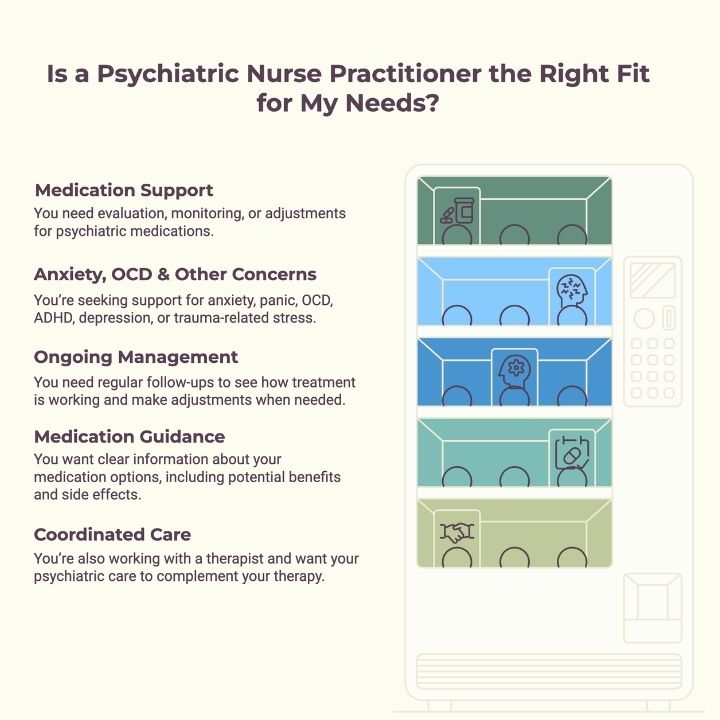
A psychiatric nurse practitioner may be a good fit for outpatient psychiatric evaluation and ongoing medication management. A PMHNP may be appropriate when you need support for:
- Anxiety, panic symptoms, or OCD
- ADHD and attention challenges
- Depression or trauma-related stress
- Medication evaluation, monitoring, or adjustments
- Coordinated care alongside a therapist
A PMHNP can discuss medication options, explain potential benefits and side effects, and monitor how treatment is working over time. They can also coordinate with a therapist when medication management and therapy are both part of your care plan.
When seeing a psychiatrist may be more appropriate

A psychiatrist may be more appropriate when symptoms, medical needs, or medication concerns are more complex. Consider seeing a psychiatrist when you have:
- Severe or rapidly worsening symptoms
- An unclear or difficult diagnosis
- Multiple medications or significant physical-health conditions
- Previous medication reactions or complex treatment history
- Psychosis, mania, or major safety concerns
How to choose psychiatric care in Indianapolis and across Indiana
The best provider is one whose credentials, clinical experience, and treatment approach match your needs. The decision is not only about choosing a psychiatrist or PMHNP.
Provider credentials, treatment needs, and personal fit
Look for a provider who is licensed in Indiana and has experience treating the concern bringing you to care. Ask about their credentials, prescribing authority, appointment availability, and how they handle medication questions or side effects.
You should feel comfortable asking questions and discussing your preferences. A qualified provider should explain recommendations, possible benefits, risks, alternatives, and follow-up care before you decide on treatment.
Coordinating medication management with evidence-based therapy
If you want both medication management and therapy, choose a psychiatric provider who is willing to coordinate with your therapist. Before booking, ask how they communicate with outside providers, what information they share with your permission, and how they decide when medication or therapy should be adjusted.
Find psychiatric nurse practitioner care at Sommer Psychology Group
Choosing between a psychiatrist and a PMHNP comes down to the type of care, training, and support that best matches your symptoms, health history, and treatment goals at this time.
Both can provide psychiatric evaluation and medication management, but complex symptoms, medical concerns, difficult diagnoses, or prior medication problems may make a psychiatrist appropriate in certain cases. For general mental-health concerns, Sommer Psychology Group’s board-certified psychiatric nurse practitioner provides medication management.
Get a Free 20-Minute Consultation with Sommer Psychology Group to discuss care options in Indianapolis or online across Indiana.
Frequently asked questions
What kind of provider is best for mental health?
The right provider depends on your needs. A psychiatrist may be helpful for complex medical or medication concerns, while a PMHNP, therapist, psychologist, or primary-care provider may be appropriate for other mental-health needs.
Is it better to go to a psychologist or psychiatrist?
Psychologists provide assessment and therapy but generally do not prescribe medication. Psychiatrists provide medical psychiatric care and medication management. Some people benefit from therapy, medication support, or both.
What provider treats depression?
Psychiatrists, psychiatric nurse practitioners, primary-care clinicians, and other qualified providers may treat depression. A full evaluation helps determine if therapy, medication, lifestyle support, or a combination may be appropriate.
Is a psychiatrist for anxiety?
Yes. Psychiatrists can evaluate anxiety and prescribe medication when appropriate. A psychiatric nurse practitioner can also provide medication management, while therapy such as CBT can help address avoidance, worry, and panic patterns.
What are red flags for psychiatrists?
Red flags include unverifiable credentials, guaranteed outcomes, pressure to accept treatment, or unwillingness to explain options, side effects, alternatives, and follow-up care. You should feel heard and included in treatment decisions.