
Have you ever felt caught in a loop of doubt that never quite settles? A thought, question, or fear keeps resurfacing, and relief only comes after you do something to make it feel “resolved.”
When that cycle starts repeating daily and draining your time and energy, it’s natural to ask, “How do you know if you have OCD?”
For many people, the distress isn’t obvious from the outside. It’s the constant mental pressure, the need for certainty, and the exhaustion of managing thoughts that won’t let go. Over time, life begins to narrow around avoiding discomfort and trying to stay in control.
Drawing from clinical experience with Obsessive-Compulsive Disorder, we’ll explain the key signs of OCD and when treatment can help. Understanding what’s happening is often the first step toward relief.
What Obsessions and Compulsions Feel Like

OCD is built around two linked experiences, the obsessions and compulsions. Together, they form a cycle that can be hard to interrupt.
How Obsessions Work
Obsessions are unwanted thoughts, images, or urges that appear suddenly and cause distress. According to the Mayo Clinic, they are intrusive and difficult to dismiss, even with effort. Rather than fading like ordinary worries, they tend to linger and create ongoing anxiety or discomfort.
Many people try to reason with these thoughts or push them away, but that often leads to the thought returning again.
What Compulsions Look Like
Compulsions are things someone does to reduce the discomfort caused by an obsession. These can be physical actions, like checking or washing, or mental habits, like reviewing events, counting, or repeating phrases silently.
Compulsions bring short-term relief. Once the relief fades, the thought comes back, and the urge to repeat the behavior returns.
12 Key Symptoms That May Point to OCD
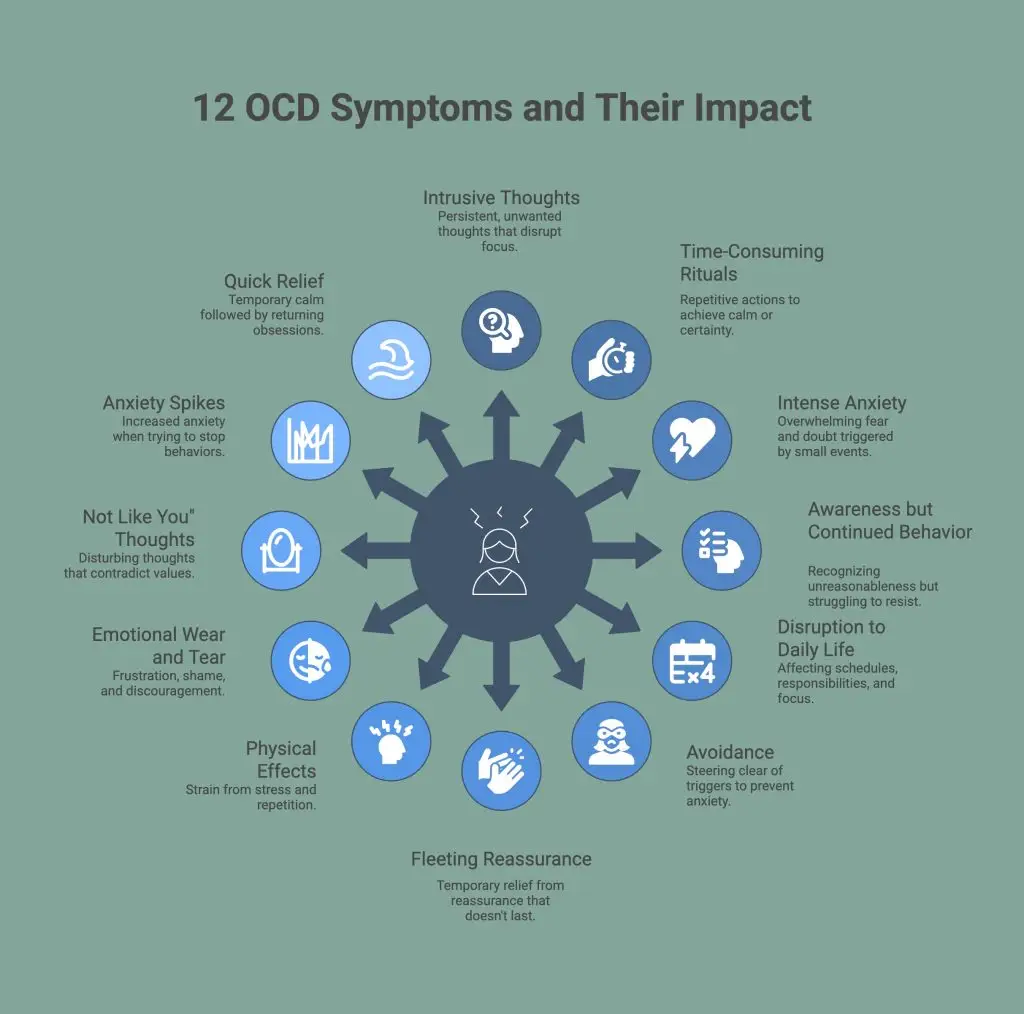
OCD tends to show up in patterns. The signs below describe some of the most common ones:
1. Persistent Intrusive Thoughts
You have thoughts, images, or urges that show up repeatedly and feel unwanted. They interrupt your focus and don’t fade on their own. Even when you know they don’t make sense, your mind keeps returning to them throughout the day.
For example, replaying a moment over and over, worrying you said something wrong, caused harm, or missed something important.
2. Time-Consuming Rituals
You repeat actions or mental steps to feel calm, certain, or “done.” What should take a short time often stretches much longer. You feel unable to move on until the ritual feels complete or done correctly.
This might look like rechecking locks, rereading messages repeatedly, or mentally reviewing tasks before you can leave the house.
3. Anxiety That Feels Too Strong
Your anxiety feels intense compared to the situation. Small triggers cause strong fear, doubt, or discomfort. The feeling doesn’t settle naturally and instead pushes you to do something to reduce it.
Touching a surface, making a small decision, or having a passing thought can suddenly feel overwhelming.
4. Knowing It’s Excessive but Still Doing It
You recognize that some thoughts or behaviors are unreasonable or unnecessary. Even with that awareness, resisting them feels overwhelming. The discomfort of not acting feels worse than continuing the behavior.
5. Disruption to Daily Life
OCD affects your schedule, responsibilities, or ability to stay present. You may run late, avoid tasks, lose focus, or struggle to complete everyday activities because your attention keeps getting pulled back to the same thoughts or behaviors.
6. Avoiding Things to Prevent Anxiety
You avoid certain places, objects, people, or situations because they trigger distressing thoughts. Avoidance feels protective at first, but it limits what you’re willing or able to do and shapes your daily decisions.
7. Reassurance That Doesn’t Last
You ask others for reassurance to feel certain or calm. Their answers help briefly, but the doubt returns. You feel the urge to ask again, even if you’ve already received reassurance multiple times.
8. Physical Effects From Repetition or Stress
Your body shows signs of strain from stress or repeated behaviors. This may include sore or irritated skin, muscle tension, headaches, fatigue, or difficulty sleeping due to constant mental or physical effort.
9. Emotional Wear and Tear
You feel frustrated, ashamed, or worn down by how much energy this takes. You may judge yourself for not being able to stop and feel discouraged when the same patterns keep repeating despite your effort.
10. Thoughts That Feel “Not Like You”
The thoughts feel disturbing because they go against your values or sense of who you are. You may worry about what the thoughts mean about you, even though you don’t want them and would never act on them.
11. Trying to Stop Makes Anxiety Spike
You’ve tried to stop or reduce behaviors on your own. Instead of easing, your anxiety rises quickly until you give in and do the ritual or mental action to feel relief again.
12. Relief That Fades Quickly
When you complete the behavior or mental routine, you feel calmer for a short time. Soon after, the thought or urge returns, and you feel pulled back into the same cycle again. Cleveland Clinic explains that compulsions temporarily relieve anxiety, but obsessions soon return, fueling a repetitive cycle.
OCD Compared to Similar Experiences

Some experiences can resemble OCD on the surface. The difference is usually not the thought itself, but how the thought behaves and what it demands from you.
OCD and Everyday Worry
Everyday worries are usually tied to real situations and fade once the issue is addressed or time passes.
With OCD, the thought doesn’t resolve. It keeps returning and creates a strong urge to do something to feel certain or safe, even when reassurance should be enough.
OCD and Generalized Anxiety
Generalized anxiety involves ongoing worry across many areas of life, such as health, work, or relationships. The worry can feel constant and overwhelming, but it doesn’t usually lead to specific rituals.
OCD tends to focus on a narrower fear and pushes you toward repeated behaviors or mental actions to reduce discomfort. In some cases, these conditions can overlap, which can make it harder to tell where one ends and the other begins.
OCD and Perfectionism
Perfectionism is driven by high standards and a desire to do things well. While it can be stressful, completing a task often brings satisfaction.
In OCD, the need for things to feel “right” creates tension rather than satisfaction, and completing rituals rarely brings lasting relief.
What separates OCD from these experiences is the cycle it creates.
A thought triggers distress, an action brings short relief, and the thought returns. Recognizing this pattern can help explain why OCD feels so persistent and hard to manage.
When It May Be Time to Seek Treatment

After recognizing OCD patterns, it’s common to wonder what comes next. Treatment often becomes helpful when managing symptoms starts to take more effort than it used to, or when daily life begins to revolve around keeping anxiety under control.
You might notice that a lot of your day goes into dealing with thoughts, calming anxiety, or adjusting routines to avoid discomfort. Even when you understand what’s happening, the same cycle keeps repeating.
If you recognize these patterns and feel stuck, seeking help is reasonable. Working with a therapist can help you learn ways to respond differently so OCD takes up less time, energy, and control in your life.
Making Sense of the Cycle
How do you know if you have OCD? It often becomes clearer when recurring thoughts, rituals, and anxiety start interfering with daily life and don’t ease with insight alone. Noticing these patterns, rather than judging them, is often the first step toward understanding what’s happening.
OCD isn’t a personal flaw, and it’s highly treatable with the right support. If what you’ve read feels familiar and you’d like guidance, reaching out can help you take the next step with clarity and care.
Contact us today to speak with a therapist who can help you understand your options and move forward at a pace that feels right.
Frequently Asked Questions
How Do I Know If My Thoughts Are OCD Or Just Anxiety?
OCD thoughts tend to feel intrusive, repetitive, and hard to dismiss, even when you know they don’t make sense. Anxiety thoughts are usually tied to real-life concerns and ease over time. If thoughts keep returning and push you toward repeated actions or reassurance, OCD may be involved.
Can You Have OCD Without Obvious Compulsions?
Yes. Some people experience mostly mental compulsions, such as reviewing conversations, checking memories, or seeking certainty in their thoughts. These internal behaviors can be just as distressing and time-consuming as physical rituals, even though they’re harder for others to see.
How Much Time Do OCD Symptoms Usually Take Up?
OCD symptoms often take up more time than people realize. This can include time spent on rituals, avoiding triggers, or mentally trying to feel certain. When these patterns begin consuming an hour or more a day, they often start interfering with daily responsibilities and relationships.
Why Does Insight Not Stop OCD Behaviors?
Many people with OCD understand their thoughts or behaviors are excessive. The problem isn’t lack of insight, but how anxiety feels in the body. Knowing something logically doesn’t calm the nervous system, which is why urges to act can remain strong despite understanding.
When Should I Talk To A Therapist About OCD?
It may be helpful to talk with a therapist when OCD patterns feel persistent, exhausting, or difficult to manage alone. You don’t need to wait until things feel extreme. Seeking guidance can help reduce how much space OCD takes up and make daily life feel more manageable.