
Many people feel stuck in a cycle of worry, overwhelm, and constant mental noise without knowing why. For many, the real issue is the anxiety and ADHD overlap, a combination that makes focusing harder and anxiety stronger.
When these conditions interact, everyday tasks feel heavier, mistakes feel personal, and even small challenges can trigger shame or panic. It’s easy to think you’re the problem, not the symptoms.
With years of supporting adults who live with both anxiety and ADHD, our team has seen how often this overlap is missed and how much relief people feel once it’s finally understood.
In this blog, you’ll learn why this overlap is so often missed, how it shapes daily life, and what current research shows about treating both conditions effectively.
What Is the Anxiety and ADHD Overlap?

ADHD and anxiety frequently occur together, far more often than most people realize. Research shows that 25–50% of adults with ADHD also have an anxiety disorder, and about 30% of children with ADHD experience meaningful anxiety symptoms. This isn’t random, both conditions share underlying genetic, neurological, and cognitive patterns that make them likely to coexist.
When someone lives with both, the symptoms can intensify each other. Focus becomes harder, emotions feel harder to regulate, and everyday tasks require more effort. Many also struggle with organization, follow-through, and social pressures, which adds even more stress.
Because the signs blend so easily, many people go years without an accurate diagnosis. One condition is often identified while the other remains overlooked, leading to frustration and treatments that only address part of the problem.
Why Is the Anxiety and ADHD Overlap Often Missed?

Understanding why these two conditions are overlooked so often requires looking at how similar they can appear on the surface, and how easily their shared symptoms can confuse even trained professionals.
1. Symptom Overlap Makes Diagnosis Difficult
Both conditions share signs like poor focus, restlessness, irritability, and disrupted sleep, which often lead clinicians to diagnose one while missing the other. Trouble concentrating in anxiety usually comes from racing thoughts, while ADHD causes consistent focus challenges even in calm moments. Restlessness also differs. ADHD brings a need for movement, while anxiety creates tense, worry-driven energy.
These differences are subtle, and they’re easy to overlook in short appointments.
2. Anxiety Can Hide ADHD Symptoms
In many adults, anxiety becomes the “loudest” issue, overshadowing ADHD symptoms. Worry, perfectionism, and overthinking can mask the disorganization, distractibility, or impulsivity that would otherwise point toward ADHD.
This is especially common in women, who are often diagnosed later in life. Without obvious hyperactivity, their ADHD may be mistaken for anxiety, depression, or simply “stress.”
3. When Anxiety Is Actually a Response to ADHD
Many people develop anxiety because of untreated ADHD. Missed deadlines, forgotten tasks, difficulties with planning, or social slip-ups can lead to chronic stress and fear of failure. This is called secondary anxiety.
If clinicians treat the anxiety alone, the root ADHD-related difficulties remain unaddressed. As a result, treatment feels only partially helpful, and symptoms continue to resurface.
4. Treating One Condition at a Time Leads to Misses
In many cases, mental health providers focus on the most distressing symptoms first. If anxiety is overwhelming, ADHD may not be assessed until much later, if at all. This single-focus approach often leaves people with incomplete care, because the two conditions interact and worsen each other.
How Symptoms of ADHD and Anxiety in Adults Overlap and Differ
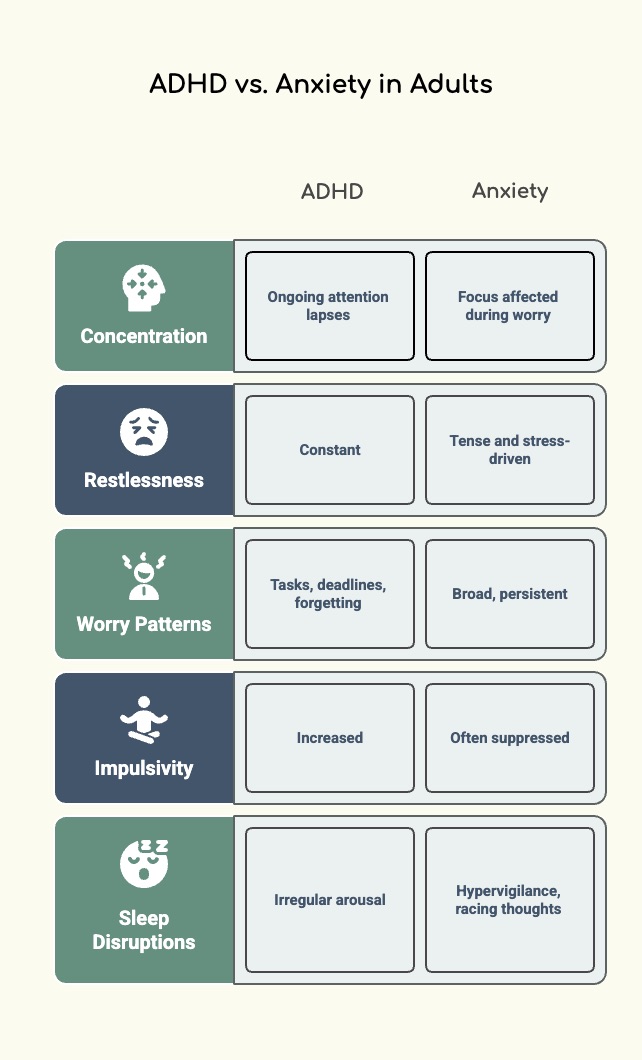
These two conditions share similar symptoms, but the reasons behind them are different. Here’s how to tell them apart:
- Concentration Difficulties: ADHD causes ongoing attention lapses. Anxiety affects focus mainly during worry.
- Restlessness: ADHD restlessness is constant. Anxiety restlessness feels tense and stress-driven.
- Worry Patterns: Anxiety creates broad, persistent worry. ADHD-related worry centers on tasks, deadlines, or forgetting things.
- Impulsivity and Inhibition: ADHD increases impulsivity. Anxiety often suppresses it, which can hide ADHD symptoms.
- Sleep Disruptions: ADHD affects sleep through irregular arousal. Anxiety disrupts sleep through hypervigilance and racing thoughts.
Biological and Genetic Reasons Behind the Overlap

The anxiety and ADHD overlap has strong biological roots. Research shows both conditions share key genes involved in brain development and neurotransmitter activity, which helps explain why ADHD and anxiety in adults often occur together.
Both conditions also involve issues with GABA, the brain’s main calming chemical. When GABA is low or doesn’t work well, the nervous system becomes more reactive, leading to hyperarousal and stronger fight-or-flight responses.
Brain imaging adds more detail. People with both anxiety and ADHD often show differences in areas that control emotion (like the amygdala) and focus (like the prefrontal cortex). These differences can make it harder to manage stress, stay organized, or regulate emotions.
Education and socioeconomic stress can also influence how strongly these genetic risks appear in daily life.
Together, these findings show why the two conditions often occur together and why symptoms can feel more intense when they overlap.
Functional Impairment and Quality of Life Effects

Individuals living with both ADHD and anxiety often experience significant challenges, including:
- Executive function difficulties make planning, organization, time management, and working memory much harder.
- Emotional dysregulation, leading to irritability, frustration, and difficulty managing stress.
- Strained social relationships due to communication challenges and increased social anxiety.
- Reduced work performance from inconsistent focus, worry, and trouble following through.
- Higher suicide risk, which increases substantially when both conditions coexist.
Effective Treatment Strategies

Managing ADHD and anxiety together works best with a personalized, well-rounded plan. Research supports the approaches below.
Medication Considerations
Stimulants increase dopamine and norepinephrine in brain areas that control attention and planning, which reduces ADHD symptoms and lowers anxiety caused by constant overwhelm. Non-stimulants regulate arousal and improve emotional stability, helping decrease worry while supporting sustained focus.
Cognitive Behavioral Therapy (CBT)
CBT reduces anxiety by challenging fearful thoughts and teaching coping strategies. For ADHD, it adds structure by improving task planning, organization, and problem-solving. Together, these changes reduce avoidance, lower stress, and help people follow through on responsibilities without becoming overwhelmed.
Mindfulness and Acceptance-Based Approaches
Mindfulness improves attention control, helping people with ADHD stay present and return focus when distracted. It also reduces anxiety by calming the body’s stress response and decreasing rumination. Acceptance skills reduce the struggle with intrusive thoughts, making emotions easier to manage.
Integrated Care
Integrated care targets the interaction between ADHD and anxiety. Time-management tools and executive-function strategies reduce chaos that often drives anxiety, while calming skills lower the physiological tension that worsens attention problems. Treating both together prevents the cycle of worry, avoidance, and distraction.
Where You Go From Here
Understanding the anxiety and ADHD overlap can bring clarity to patterns that once felt confusing or overwhelming. When both conditions are recognized together, many people feel more hopeful and better equipped to move forward.
If this overlap sounds familiar, consider reaching out to a mental health professional who understands both. Schedule a consultation today to get the guidance and support you deserve.
Frequently Asked Questions
Can you have both ADHD and anxiety at the same time?
Yes, ADHD and anxiety commonly co-occur, affecting 25-56% of adults with ADHD. This overlap intensifies symptoms like poor focus and restlessness, complicating daily life, but integrated treatment can address both effectively.
How do you tell the difference between ADHD and anxiety?
ADHD causes persistent inattention across all situations, even when calm, while anxiety impairs focus mainly during worry or stress. ADHD restlessness seeks stimulation, and anxiety stems from fear. Clinicians differentiate via history and triggers.
Does anxiety make ADHD symptoms worse?
Yes, anxiety exacerbates ADHD by worsening inattention, working memory, and restlessness through added stress. This creates a vicious cycle where ADHD struggles fuel more anxiety, increasing overall impairment in adults and children alike.
Are stimulants safe for people with ADHD and anxiety?
Stimulants are often safe and effective, improving ADHD focus which reduces task-related anxiety in many cases. Contrary to past concerns, they rarely worsen anxiety; non-stimulants like atomoxetine serve as alternatives if needed.
Why is ADHD with anxiety often diagnosed later?
Anxiety masks ADHD hyperactivity, presenting mainly as inattention mistaken for anxiety alone, especially in women and inattentive types. Without disruptive behaviors, symptoms fly under the radar until adulthood stresses reveal the full picture.