
Can OCD be passed down through families? It’s a common question for people who have a parent, sibling, or other close family member living with it.
Having a relative with OCD may increase your risk, but environmental factors and life experiences also play a role in the development of symptoms.
Looking at how genetics and life experiences work together can make OCD easier to understand.
How family history can increase OCD risk

Family history can increase the risk of Obsessive-Compulsive Disorder (OCD) by passing down inherited traits that affect how the brain responds to anxiety, uncertainty, and intrusive thoughts.
If you have ever wondered if OCD is hereditary, the answer is yes. OCD occurs more often among biological relatives, and studies suggest that about 10% to 20% of children with a parent who has OCD will develop OCD. However, a family history of OCD does not mean symptoms will develop.
Why there is no single OCD gene
OCD is not caused by one inherited gene that gets passed from parent to child. Instead, hundreds of genetic variations may contribute small amounts to risk. This helps explain why OCD can run in families while still affecting each person differently.
Are You Born With OCD, Or Does It Develop?
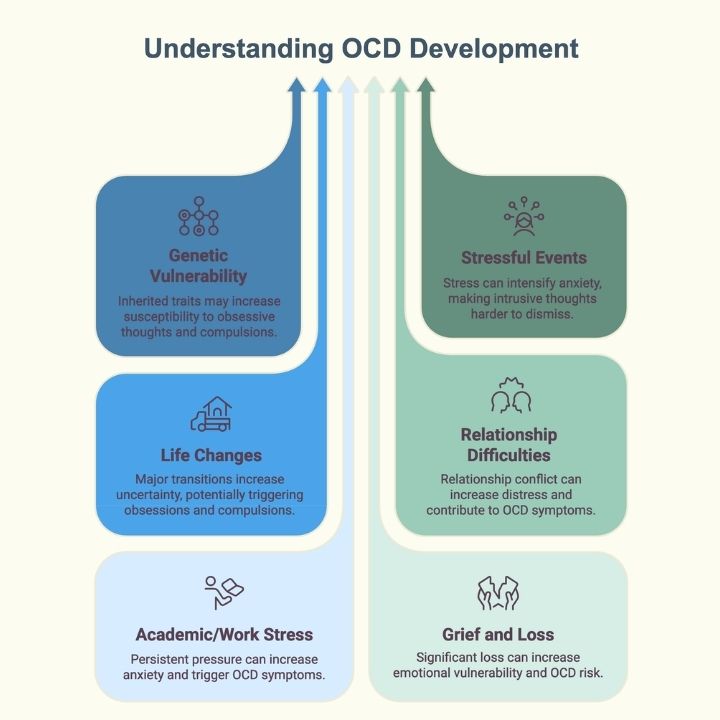
OCD typically develops during childhood, adolescence, or early adulthood. Genetics can increase vulnerability, while life experiences and environmental factors may influence when symptoms appear.
Genetic Vulnerability
Genetic vulnerability means a person may inherit traits that make them more susceptible to developing OCD. This increased risk can make OCD more likely, but it does not mean someone is born with OCD or will definitely develop the condition.
Stress, Life Changes, And Symptom Triggers
Stressful events can contribute to the onset or worsening of OCD symptoms. Common triggers include:
- Major life changes
- Relationship difficulties
- Academic or work-related stress
- Grief and loss
- Trauma
- Chronic stress
- Moving, starting a new job, or other significant life transitions
What are the signs of OCD?

Symptoms vary from person to person, but OCD typically involves a cycle of unwanted thoughts and actions that are performed to reduce anxiety or gain certainty, which can help explain how to know if you have OCD.
Intrusive thoughts
Intrusive thoughts are unwanted thoughts, images, or urges that create distress. Common themes include contamination, harm, health concerns, relationships, morality, and responsibility. These thoughts do not reflect a person’s intentions or values.
Compulsions and rituals
Compulsions are repetitive behaviors or mental rituals used to reduce anxiety caused by intrusive thoughts. Common examples include:
- Checking locks, appliances, or mistakes repeatedly
- Excessive handwashing or cleaning
- Counting or repeating actions a specific number of times
- Repeating words, phrases, or prayers
- Seeking reassurance from others
- Mentally reviewing past events for certainty
Avoidance and reassurance-seeking
Someone may avoid situations that trigger uncertainty or repeatedly ask others for confirmation that their fears are unfounded. While these behaviors may bring temporary relief, they can make OCD harder to break.
What should you do if OCD runs in your family?

If OCD runs in your family, paying attention to persistent symptoms and seeking support when concerns arise can help with early identification and treatment.
When to seek an evaluation
An evaluation may be helpful if intrusive thoughts, compulsions, or avoidance behaviors are causing distress or interfering with everyday activities. Early assessment can help clarify what is happening and identify appropriate OCD treatment options.
How evidence-based therapy can help
Evidence-based therapy helps people respond differently to intrusive thoughts and reduce compulsive behaviors. Exposure and Response Prevention (ERP) helps people face fears without performing compulsions.
Cognitive Behavioral Therapy (CBT) addresses unhelpful thinking patterns, while Acceptance and Commitment Therapy (ACT) builds psychological flexibility and values-based action.
Get OCD therapy in Indianapolis or online in Indiana
While OCD can be hereditary, a family history of the condition does not determine your future. Understanding your risk, recognizing symptoms early, and seeking evidence-based treatment can help reduce OCD’s impact on daily life.
At Sommer Psychology Group, we provide specialized OCD therapy in Indianapolis and online throughout Indiana.
Schedule a Free 20-Minute Consultation to learn more about your symptoms, ask questions, and explore treatment options with our team.
Frequently asked questions
Can OCD be passed from parent to child?
Yes, OCD can run in families, but inheritance is not predictable. Many children of parents with OCD never develop the condition, while some people with OCD have no known family history.
What age does OCD usually start?
OCD most commonly begins between ages 7 and 12 or during the late teen and early adult years, typically between 18 and 25. Symptoms may develop gradually or become more noticeable during periods of stress or significant life change.
What triggers OCD symptoms?
Triggers vary from person to person, but common examples include stress, uncertainty, major life transitions, relationship difficulties, and situations that activate specific fears or obsessions.
What happens if OCD is left untreated?
OCD often becomes more disruptive when left untreated. Symptoms may begin taking up more time, increase avoidance behaviors, and interfere with relationships, work, school, and daily responsibilities.
How do therapists test for OCD?
Therapists assess OCD through a clinical evaluation that explores intrusive thoughts, compulsive behaviors, avoidance patterns, and the impact symptoms have on everyday life. There is no single medical test used to diagnose OCD.