
What is the difference between anxiety and ADHD? The two conditions can share several symptoms, which can make them difficult to tell apart.
ADHD primarily affects attention, focus, and executive functioning, while anxiety is driven by worry, fear, and the body’s stress response. Although the symptoms may appear similar, the underlying causes are often different.
Recognizing those differences can help you better understand what you are experiencing.
Why anxiety and ADHD are easy to confuse
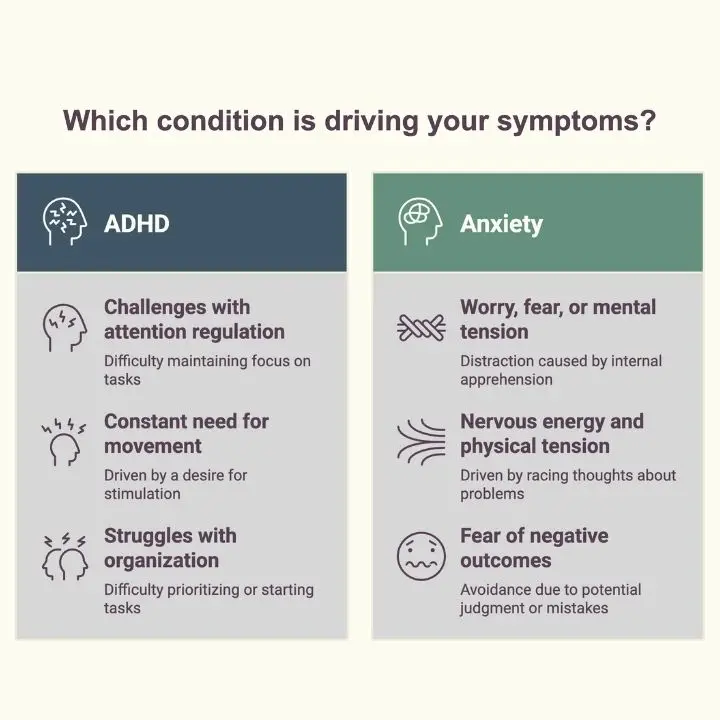
Anxiety and Attention-Deficit/Hyperactivity Disorder (ADHD) can look very similar because they share several symptoms, including difficulty concentrating, restlessness, procrastination, and feeling overwhelmed.
Focus problems
ADHD-related focus problems are often caused by challenges with attention regulation and maintaining focus. Anxiety-related focus problems are usually caused by worry, fear, or mental tension that pulls attention away from the task at hand.
Restlessness and racing thoughts
ADHD-related restlessness feels like a constant need for movement, activity, or stimulation. Restlessness from anxiety is more likely to feel like nervous energy, physical tension, or racing thoughts about potential problems.
Avoidance, procrastination, and overwhelm
People with ADHD procrastinate because they struggle with organization, prioritization, or getting started on tasks. People with anxiety may procrastinate because they fear making mistakes, being judged, or facing an uncomfortable situation.
What points more toward anxiety?

Persistent worry, fear, and physical symptoms of stress often point more toward anxiety than ADHD.
Worry, fear, and worst-case thinking
Anxiety sometimes causes the mind to focus on potential threats, problems, or worst-case outcomes. Some people find themselves repeatedly analyzing situations, seeking reassurance, or anticipating negative results even when there is little evidence of danger.
Physical anxiety and panic symptoms
Anxiety can affect both the mind and body. Common symptoms include:
- Muscle tension
- A racing heart
- Sweating
- Stomach discomfort
- Shortness of breath
- Dizziness
- Panic attacks
These physical symptoms are more commonly associated with anxiety than ADHD.
What points more toward ADHD?

Attention difficulties that show up consistently in different situations are often more closely associated with ADHD.
Inattention across different situations
People with ADHD often experience attention difficulties in multiple environments, not only during stressful situations.
They may struggle to stay focused during conversations, forget responsibilities, lose important items, or become distracted even when they are not feeling anxious.
Disorganization, impulsivity, and time blindness
ADHD commonly affects organization, impulse control, and time management. ADHD time blindness refers to difficulty accurately sensing the passage of time, which can contribute to missed deadlines, chronic lateness, and trouble planning.
Can you have both anxiety and ADHD?

Yes, anxiety and ADHD can overlap, making it possible to experience both conditions at the same time.
One study found that approximately 47% of adults with ADHD also have an anxiety disorder. The conditions often occur together because the challenges associated with ADHD can create frequent stress, frustration, and self-doubt.
As a result, some people develop anxiety alongside ADHD, making it important to consider both conditions during an evaluation.
Talk with a therapist about anxiety, ADHD, or both in Indiana
When anxiety and ADHD overlap, it can be difficult to understand what is contributing to your symptoms. A clearer understanding of what you are experiencing can make it easier to find the right support.
If these challenges have been affecting your daily life, Schedule a Free 20-Minute Consultation to learn more about your options and how therapy may help.
Frequently asked questions
How do I know if it’s ADHD or just anxiety?
ADHD-related difficulties are usually present across many situations and often begin in childhood. Anxiety-related difficulties are more closely connected to worry, fear, stress, or specific triggers that interfere with concentration and daily functioning.
How is ADHD mistaken for anxiety?
ADHD is often mistaken for anxiety because both conditions can affect focus, productivity, sleep, and emotional regulation. The symptoms may look similar, even though the underlying causes are different.
Is overthinking ADHD or anxiety?
Overthinking is more commonly associated with anxiety. It often involves repeatedly analyzing situations, worrying about future outcomes, or getting stuck on fears that feel difficult to stop or control.
Can ADHD cause panic attacks?
ADHD does not directly cause panic attacks. However, the challenges associated with ADHD can contribute to stress and anxiety, which may increase the likelihood of experiencing panic symptoms.
Do I have ADHD or anxiety or both?
It can be difficult to tell without a professional evaluation. Because anxiety and ADHD frequently occur together, an assessment can help identify what is contributing to your symptoms.