
What causes anxiety in college students? Many students experience anxiety as they adjust to the new responsibilities, expectations, and challenges that come with college.
While stress can be a part of college, it can become harder to manage when challenges feel constant or overwhelming. As those pressures build, they can begin affecting emotional well-being, academic performance, relationships, and daily functioning.
Let’s take a closer look at some of the most common causes of college anxiety.
What tends to turn college stress into anxiety?
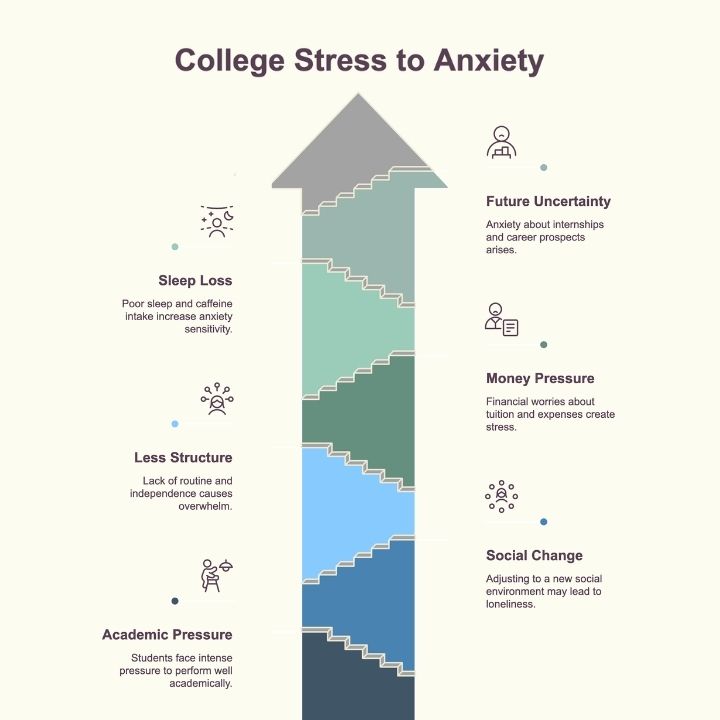
College stress often turns into anxiety when challenges feel overwhelming, constant, or difficult to manage. What starts as normal stress can become harder to cope with.
Academic pressure and test performance
According to a study, academic stress may be the leading factor affecting college students’ mental health. The pressure to meet expectations and perform well on exams can create persistent worry, especially when students view test performance as closely connected to future opportunities.
Social change, loneliness, and roommate stress
Adjusting to a new social environment can trigger anxiety attacks for many college students. Building a sense of belonging takes time, and the pressure to form new connections while adapting to unfamiliar situations can create feelings of loneliness, uncertainty, and self-doubt.
Less structure away from home
Greater independence can make college feel overwhelming for some students. Without consistent routines, students may struggle with time management, healthy habits, and balancing responsibilities, which can contribute to increased stress and anxiety.
Money pressure and work-school balance
Worrying about tuition, living expenses, and student debt can create ongoing stress. For students balancing work and school, limited time for studying, rest, and self-care can make academic and financial pressures feel even harder to manage.
Sleep loss, caffeine, and schedule changes
Poor sleep can increase stress sensitivity and make emotional regulation more difficult. Higher caffeine intake has also been associated with an elevated risk of anxiety, while irregular schedules can further disrupt sleep and increase feelings of stress and worry.
Uncertainty about internships, jobs, and the future
The pressure to make important career decisions can create significant anxiety during college. Competing for internships, preparing for life after graduation, and navigating an increasingly competitive job market can create ongoing stress and uncertainty.
When should college anxiety get more support?

If anxiety is affecting academic performance, relationships, physical health, or overall well-being, it may be helpful to seek professional support. Some signs include:
- Constant worry that feels difficult to control
- Difficulty concentrating in class or while studying
- Changes in sleep or appetite
- Avoiding classes, social situations, or responsibilities
- Frequent feelings of overwhelm
- Panic attacks or physical anxiety symptoms
- Anxiety that interferes with everyday life
Experiencing one or more of these signs does not necessarily mean a student has an anxiety disorder, but they may indicate that additional support could be helpful.
What helps college students manage anxiety?

While no single approach works for everyone, small and consistent changes often make a meaningful difference.
Daily routines
Creating consistency in everyday life can help reduce stress and improve emotional well-being. Regular sleep schedules, physical activity, balanced meals, and structured study times can help make anxiety feel more manageable while supporting anxiety treatment goals.
Coping skills
Practical skills can help students manage stress before it becomes overwhelming. Deep breathing, mindfulness exercises, journaling, time-blocking, and realistic goal setting can support healthier responses to anxiety.
Therapy and support
Professional and personal support can make anxiety feel more manageable. Therapy can help students better understand anxiety and develop practical strategies for navigating challenges. Support from trusted people and campus resources can also play an important role.
Talk with an Indiana therapist about college anxiety
College can be demanding, and anxiety can make those challenges feel even heavier. If stress and worry have become difficult to manage, speaking with a therapist can help you better understand what is happening and develop healthier ways to respond.
Schedule a Free 20-Minute Consultation to talk about your concerns and find ways to make college feel more manageable.
Frequently asked questions
What are the top causes of anxiety in college students?
Academic pressure is often the leading contributor to college anxiety. Other common factors include financial stress, social adjustment, sleep disruption, increased independence, and uncertainty about future career and educational goals.
What are 5 warning signs of anxiety?
Persistent worry, difficulty concentrating, sleep problems, physical tension, and avoidance of responsibilities are common warning signs. When these symptoms begin affecting daily life, it may be time to seek additional support.
How can college students cope with anxiety?
Small, consistent habits often help reduce anxiety. Regular sleep, physical activity, healthy coping skills, realistic schedules, social support, and professional guidance can all improve emotional well-being and resilience.
What is the best therapy for anxiety?
Cognitive Behavioral Therapy (CBT) is one of the most effective treatments for anxiety. It helps people identify unhelpful thought patterns, develop coping skills, and respond to stress more effectively.
Can you go back to normal after anxiety?
Many people experience significant improvement with appropriate support and treatment. While anxiety may not disappear completely, it often becomes much more manageable and less disruptive to daily life.