
What does an anxiety attack feel like? The experience can be frightening, especially if it is happening for the first time.
An anxiety attack can cause intense physical and emotional symptoms, including a racing heart, shortness of breath, dizziness, muscle tension, and overwhelming worry.
Here’s how to recognize the symptoms of an anxiety attack, understand what may be causing them, and learn practical ways to respond.
Anxiety attack symptoms at a glance

An anxiety attack can affect your body, emotions, and ability to think clearly all at once. You may notice changes in your breathing, heartbeat, muscles, or stomach while also feeling overwhelmed, restless, or unusually alert. Symptoms often build gradually as anxiety increases and ease as your nervous system begins to settle.
What happens in your body during an anxiety attack

An anxiety attack can trigger your body’s natural fight-or-flight response, causing physical symptoms that may feel intense and frightening. Your brain releases stress hormones that prepare you to react to a perceived threat, even when you are safe. You may notice:
- A racing heartbeat, chest tightness, or shortness of breath.
- Muscle tightness, trembling, or shaking.
- Sweating, chills, or hot flashes.
- Nausea, an upset stomach, or loss of appetite.
- Dizziness or feeling lightheaded.
What an anxiety attack can feel like mentally
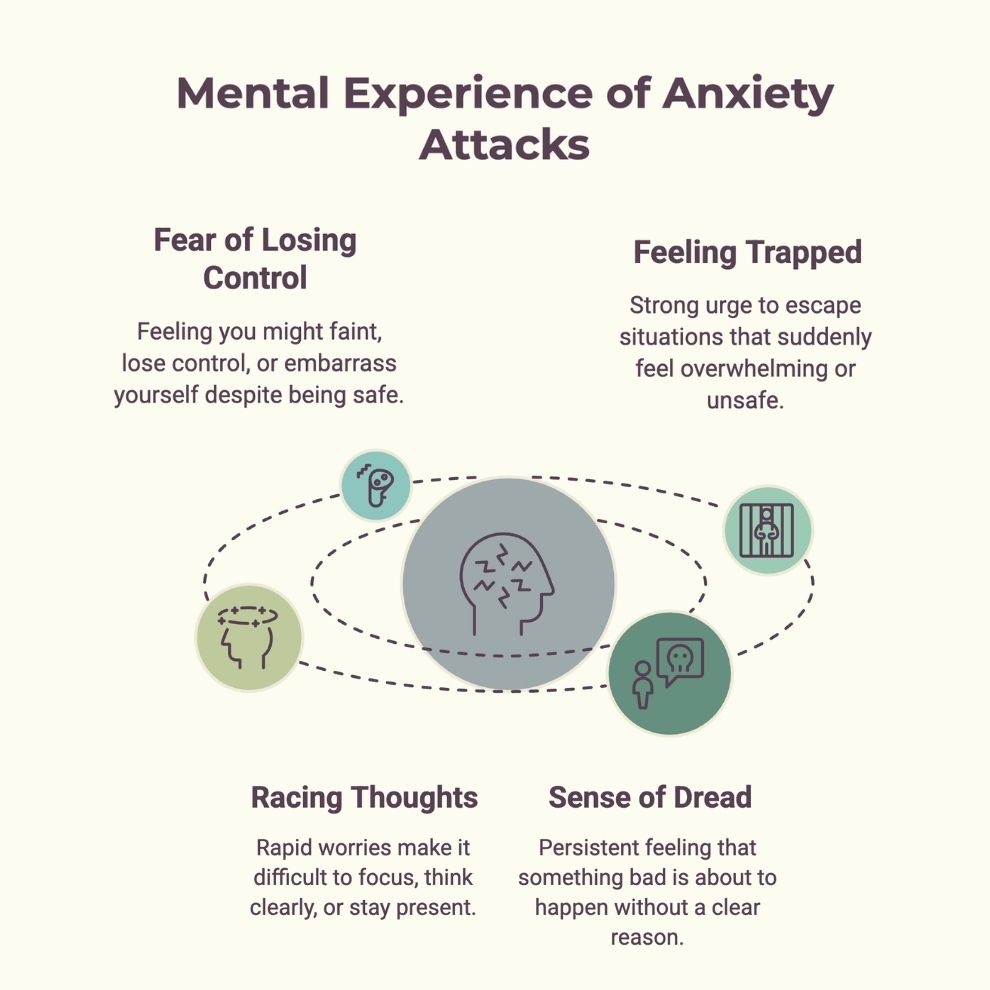
An anxiety attack can affect your thoughts and emotions just as strongly as your body. You may experience a fear of losing control, feel trapped or overwhelmed, or struggle with racing thoughts and a persistent sense that something bad is about to happen.
Fear of losing control
An anxiety attack can make you feel as though you are about to lose control, even when you are safe. You may worry that you will faint, embarrass yourself, “break down,” or be unable to cope with what is happening. These fears can feel convincing, but they are a common response to intense anxiety.
Feeling trapped, unsafe, or overwhelmed
An anxiety attack can create a strong urge to leave the situation or find a place that feels safer. Familiar environments may suddenly feel overwhelming, making it difficult to relax until the intensity of the anxiety begins to ease.
Racing thoughts or a sense of dread
Your thoughts may move quickly from one worry to another, making it difficult to slow your mind or stay present. You may also experience a persistent feeling that something is wrong or that something bad is about to happen without knowing why.
Anxiety attack vs. panic Attack
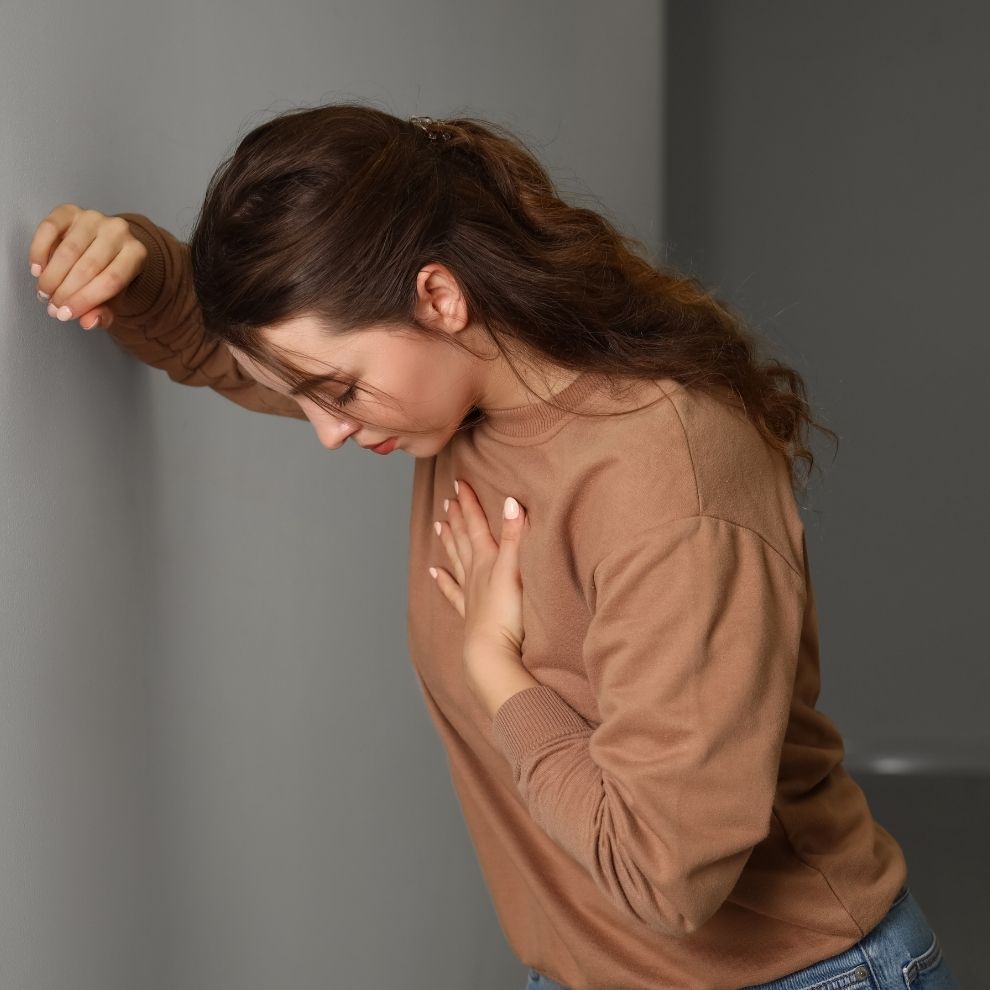
Anxiety attacks and panic attacks can feel similar, but they are different experiences. Anxiety attacks usually build gradually in response to ongoing stress or worry. Panic attacks begin suddenly, often without warning, and typically peak within about 10 minutes.
Both can cause intense physical symptoms, but panic attacks are generally more severe.
Common anxiety attack triggers

Anxiety attacks triggers are often connected to situations that leave you feeling stressed, overwhelmed, or emotionally unsettled.
Stress and overthinking
Periods of ongoing stress or constant worry can gradually build until anxiety feels difficult to manage. Spending a lot of time thinking through worst-case scenarios can also make symptoms feel more intense.
Sleep, caffeine, or physical strain
Lack of sleep, too much caffeine, illness, or physical exhaustion can leave your body more sensitive to stress. These factors do not cause anxiety, but they can make symptoms easier to trigger.
Specific places, memories, or situations
Certain places, memories, sounds, smells, or situations can act as reminders of a previous distressing experience. When you encounter those reminders, your body may react with anxiety even though you know you are safe.
What to do during an anxiety attack
Small, practical steps can help you move through an anxiety attack more calmly. Slowing your breathing, grounding yourself in the present, and allowing the symptoms to pass without fighting them can help your body begin to settle.
Slow your breathing
Breathe in gently through your nose for about 4 seconds, then breathe out slowly through your mouth for 6 seconds. Repeat this for a few minutes, keeping your shoulders relaxed instead of trying to force deep breaths.
Ground yourself in the room
Look around and name five things you can see, four you can touch, three you can hear, two you can smell, and one you can taste. Focusing on your surroundings can help shift your attention away from the anxiety.
Let the symptoms pass without fighting them
Instead of telling yourself to “stop feeling anxious,” remind yourself that the sensations are uncomfortable but temporary. Notice each symptom without judging it, and allow it to rise and fall while you continue breathing slowly.
Address anxiety symptoms before they take over
The physical and emotional symptoms of an anxiety attack can feel intense, but they are treatable. The sooner you recognize your triggers and learn practical coping skills, the easier it becomes to respond with confidence instead of fear.
Get a Free 20-Minute Consultation to learn how Sommer Psychology Group can support your recovery.
Frequently asked questions
How do I know when I’m having an anxiety attack?
An anxiety attack often feels like a sudden wave of overwhelming worry with noticeable physical symptoms. A racing heart, shortness of breath, dizziness, and muscle tension commonly occur together during periods of heightened anxiety.
What triggers anxiety attacks?
Stress is one of the most common anxiety attack triggers. Work pressure, relationship challenges, financial concerns, health worries, or reminders of past experiences can all contribute to rising anxiety.
How long do anxiety attacks last?
Anxiety attacks can last from several minutes to much longer, depending on the source of stress. Symptoms usually build gradually and begin to ease as anxiety decreases.
What calms down anxiety fast?
Slow, steady breathing and grounding exercises are often the quickest ways to reduce anxiety in the moment. These techniques help calm your body’s stress response without trying to force the feelings away.
When should you go to the hospital for anxiety?
Go to the hospital if your symptoms could be a medical emergency or you are concerned about your safety. Chest pain, severe breathing difficulty, loss of consciousness, or thoughts of self-harm should never be ignored.