
How do students with ADHD actually succeed in college? It often require more independence, organization, and self-management than many students expect during the first semester.
Succeeding in college with ADHD often depends on building structure, accountability, accommodations, and support systems before stress becomes overwhelming.
These are the strategies most commonly connected to steadier academic functioning in students with ADHD.
Why ADHD can make college harder

College gives students far more independence, but much less structure. Classes, deadlines, studying, sleep, and responsibilities suddenly depend on self-management, which can feel overwhelming for students with ADHD once routines become inconsistent or workloads start increasing.
Research found that college students with ADHD reported higher levels of academic stress and executive functioning difficulties than students without ADHD.
Because of this, procrastination, emotional overwhelm, poor sleep, and burnout often become more noticeable once assignments and responsibilities begin piling up.
5 ways to succeed in college with ADHD
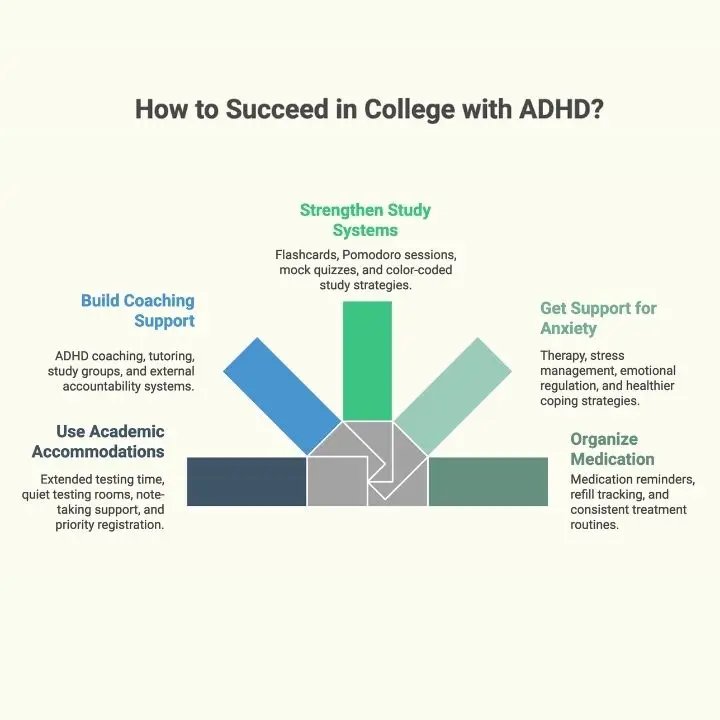
Students with ADHD often do better in college when support systems are built before stress and deadlines become overwhelming. Consistent structure and external support usually work more effectively than relying on motivation alone.
1. Use academic accommodations early
Academic accommodations may reduce stress and improve follow-through during demanding semesters.
Extended testing time, quieter testing rooms, note-taking support, or priority registration can help students feel more supported before falling behind starts affecting grades or confidence.
2. Build coaching or accountability support
External accountability often helps students stay more consistent with assignments and routines. ADHD Therapy, coaching, tutoring, or study groups may reduce procrastination and improve follow-through during stressful academic periods.
3. Strengthen study systems before classes pile up
Students with ADHD often retain information better through active learning strategies instead of passive reading alone.
Flashcards, mock quizzes, color-coded notes, and the Pomodoro Technique, which uses 25-minute work periods followed by short breaks, may improve concentration while reducing mental fatigue during long study sessions.
4. Get support for anxiety, mood, and overwhelm
Anxiety, burnout, emotional overwhelm, and poor sleep commonly make ADHD symptoms feel harder to manage during college.
Therapy can help students build healthier coping strategies before stress and academic pressure start affecting focus, follow-through, and emotional regulation more consistently.
5. Keep medication and treatment plans organized
Medication remains one of the most evidence-supported ADHD treatments for improving attention and academic functioning.
Calendar reminders, refill alerts, and structured routines may help students stay more consistent with treatment during stressful semesters.
What ADHD college success looks like in real life

ADHD and college success rarely mean becoming perfectly organized or productive all the time. Success often comes from building routines, accommodations, accountability systems, and study habits that work with ADHD instead of constantly fighting against it.
Students may start missing fewer deadlines, recovering faster after setbacks, using accommodations more consistently, communicating earlier with professors, or feeling less overwhelmed during stressful academic periods.
Find steadier support for undiagnosed ADHD in college students
Undiagnosed ADHD can make college feel inconsistent and harder to navigate, especially during stressful academic periods.
Getting support earlier can help students better understand their symptoms while building routines and coping strategies that feel more realistic and sustainable.
Sommer Psychology Group helps college students strengthen focus, emotional regulation, and academic functioning through evidence-based ADHD support. Get a Free 20-Minute Consultation to learn how therapy can help college feel more manageable.
Frequently asked questions
Do people with ADHD do well in college?
Yes, students with ADHD can do well in college once support systems become more consistent. Accommodations, accountability, structured study habits, therapy, and treatment support often help students improve focus, follow-through, and academic confidence over time.
What are the red flags of ADHD in college students?
Frequent procrastination, missed deadlines, inconsistent grades, emotional overwhelm, poor time awareness, and difficulty starting assignments are common ADHD warning signs in college students. Sleep problems, burnout, and struggling to keep up despite strong effort are also commonly reported.
What is the best environment for ADHD?
Quiet study spaces, visual reminders, shorter work periods, body doubling, accountability support, and consistent schedules often help focus feel more manageable and less mentally exhausting.
What are triggers that make ADHD worse?
Poor sleep, chronic stress, overstimulation, inconsistent schedules, emotional overwhelm, and long periods without breaks can make ADHD symptoms feel more intense. Large unstructured workloads and constant multitasking also commonly worsen concentration, impulsivity, and mental fatigue.
What is the best lifestyle for people with ADHD?
ADHD symptoms often improve when sleep, meals, movement, stress management, and daily structure become more consistent. Regular exercise, balanced nutrition, external accountability, focused work periods, and realistic routines usually support steadier focus and emotional regulation.