
Can diet actually help ADHD symptoms? ADHD can affect focus, energy, motivation, routines, and emotional regulation in ways that often feel frustrating and inconsistent.
Treating ADHD with diet may help support steadier focus, energy, and brain function, especially when meals reduce blood sugar crashes throughout the day. Nutrition is not considered a cure, but certain eating patterns may help symptoms feel less disruptive.
The following are the diet changes most commonly connected to steadier focus and energy.
Can diet help with ADHD symptoms?

A healthy and balanced diet can help support ADHD symptoms by stabilizing energy, improving focus, and supporting brain function.
Diet is not considered a cure for ADHD, but certain eating patterns may help reduce concentration crashes, irritability, impulsive eating, and fluctuating energy levels throughout the day.
Research on treating ADHD with diet remains mixed, though some studies suggest omega-3 fatty acids and certain elimination diets may improve focus and behavior in some individuals. Elimination diets and food sensitivity testing may help some individuals identify triggers, but diet alone is not considered a cure for ADHD.
Nutrition often works best alongside therapy, coping skills, education, medication, or behavioral support, depending on the person’s symptoms and needs.
7 diet changes that can support ADHD focus
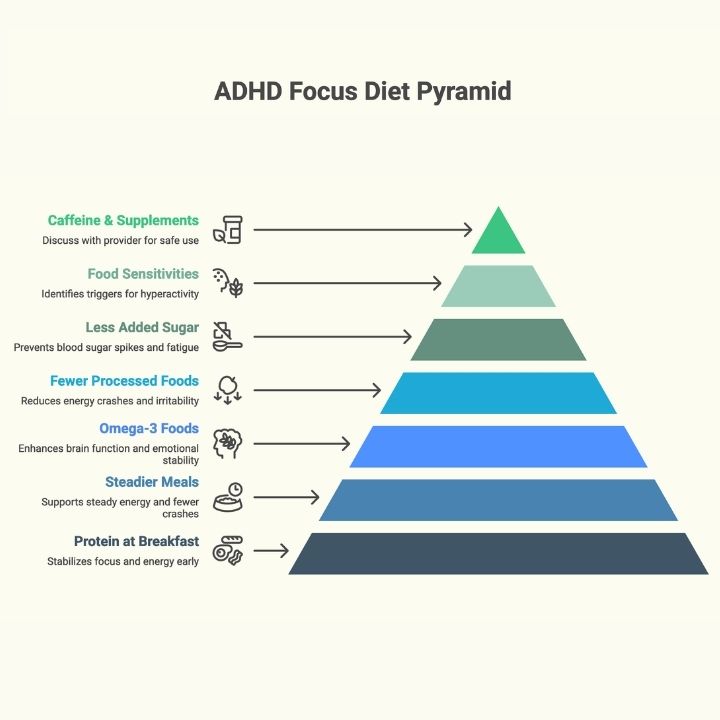
Food choices do not cure ADHD, but certain eating patterns may help support steadier focus, energy, and emotional regulation.
Protein at breakfast
Protein may help stabilize focus and energy earlier in the day. Two eggs provide about 12 grams of protein, while one cup of plain Greek yogurt contains roughly 15 to 20 grams and digests more slowly than sugary breakfasts.
Steadier meals and snacks
Skipping meals can worsen irritability, fatigue, and concentration problems. Balanced meals with protein, fiber, and complex carbohydrates can help support steadier energy and fewer attention crashes throughout the day.
More omega-3-rich foods
Omega-3 fatty acids support brain and nervous system function and may help attention and emotional regulation feel more stable.
Adding foods like salmon, tuna, walnuts, chia seeds, or flaxseeds into regular meals may help support steadier focus throughout the day.
Fewer ultra-processed foods
Ultra-processed foods may contribute to energy crashes, irritability, and difficulty concentrating later in the day. Reducing packaged snacks, soda, candy, and fast food may help focus and energy feel more stable and predictable.
Less added sugar and refined carbs
Sugary foods and refined carbohydrates can cause rapid blood sugar spikes followed by fatigue and attention crashes.
Choosing slower-digesting foods like oatmeal, brown rice, beans, and whole grains may help support steadier energy throughout the day.
Food sensitivities and additives
Certain additives or foods may worsen hyperactivity, headaches, digestive discomfort, or concentration problems in some individuals. Paying attention to patterns after eating highly processed foods or artificial dyes may help identify possible symptom triggers.
Caffeine and supplements with provider guidance
Caffeine affects ADHD symptoms differently depending on the person and may sometimes worsen anxiety, irritability, or sleep problems.
Supplements like magnesium, zinc, vitamin D, iron, and omega-3 fatty acids are best discussed with a healthcare provider before regular use.
When ADHD needs more than diet changes

Nutrition can support ADHD symptom management, but ADHD affects attention, emotional regulation, motivation, routines, and stress responses in ways food alone may not fully address.
If symptoms continue affecting focus, work, relationships, or emotional well-being more consistently, additional support may become important.
Therapy for ADHD can help people better understand why symptoms affect focus, motivation, emotional regulation, and daily routines so consistently. Treatment often focuses on building practical strategies that make responsibilities, stress, and emotional overwhelm feel easier to manage.
Build a steadier ADHD plan with Sommer Psychology Group
Treating ADHD with diet may support focus, energy regulation, and emotional stability, especially when meals become more balanced and predictable. Nutrition alone does not replace ADHD treatment, but small changes can help concentration, routines, and emotional regulation feel easier to manage.
At Sommer Psychology Group, we help adults build practical coping strategies that support long-term ADHD management and emotional regulation. Get a Free 20-Minute Consultation to find support options that fit your needs.
Frequently asked questions
Can diet help ADHD without medication?
Yes, diet may help support focus, energy regulation, and emotional stability without medication for some individuals. Balanced meals, steady protein intake, hydration, and fewer ultra-processed foods may help reduce attention crashes and fluctuating energy levels.
Can you control ADHD through diet?
Diet alone is not considered a complete ADHD treatment, but nutrition may help support symptom management. ADHD often involves executive functioning, emotional regulation, and behavioral patterns that may still require therapy, coping strategies, education, or medication support.
What are ADHD foods to avoid?
Highly processed foods, sugary drinks, refined carbohydrates, and artificial additives may worsen energy crashes, irritability, or concentration problems in some individuals. Artificial dyes and preservatives like sodium benzoate are commonly studied in relation to hyperactivity and attention symptoms.
What foods help ADD?
Protein-rich foods, omega-3-rich foods, high-fiber carbohydrates, and balanced meals may help support steadier energy and concentration. Eggs, salmon, Greek yogurt, oatmeal, beans, nuts, chia seeds, and whole grains are commonly connected to brain and nervous system support.
Should adults with ADHD try supplements?
Supplements may help when nutrient deficiencies are present, but they are not considered standalone ADHD treatments. Magnesium, iron, zinc, vitamin D, and omega-3 supplements should ideally be discussed with a healthcare provider before regular use.