
Anxiety touches millions of lives every day, slipping into thoughts, tightening chests, and disrupting sleep. If you’ve ever wondered, “Why does this keep happening to me?”, that question often reflects how confusing and unpredictable it can feel.
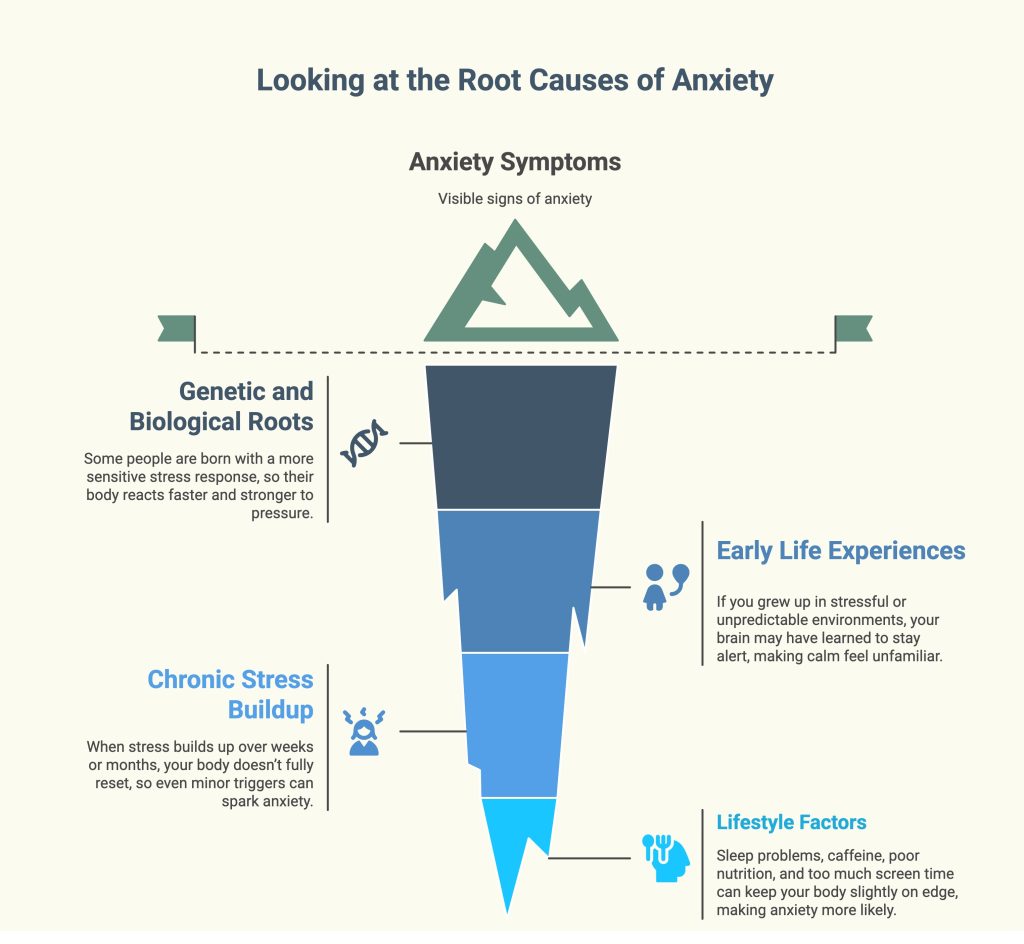
Anxiety rarely has one single cause. The root causes of anxiety usually develop over time through a mix of biological sensitivity, early life experiences, chronic stress, and modern pressures.
As clinicians who treat anxiety, we see how these factors shape the nervous system. In this guide, we’ll explain these underlying drivers so you can better understand what may be contributing to your symptoms.
How Anxiety Forms and Why It Persists

Anxiety is a natural biological response to perceived threat. It is part of the body’s survival system, designed to help you anticipate danger and prepare to respond. When this system activates, your heart rate increases, breathing shifts, and muscles tighten.
In short bursts, this response is useful. It sharpens focus and increases alertness in situations that require quick action. Once the threat passes, the nervous system is meant to return to a calmer state.
Anxiety becomes a concern when this response activates too often, too intensely, or without a clear external threat. The body reacts as if something is wrong, even when you are objectively safe. Over time, this repeated activation can create persistent worry, tension, or panic.
This shift does not happen randomly. It typically develops through biological vulnerability, learned responses, and ongoing stress exposure. Recognizing the root causes of anxiety helps clarify what may be maintaining the cycle.
Genetic and Biological Roots
Genetics can influence how sensitive your nervous system is to stress. Research suggests that heritability estimates for anxiety disorders often range between 30 and 60 percent. If a close family member has struggled with anxiety, your likelihood may be higher, though genetics alone do not determine outcomes.
Certain brain systems are involved in how anxiety develops. The amygdala helps detect threat, while the stress response system regulates hormones like cortisol. When these systems become more reactive, the body may respond quickly and intensely to perceived danger.
Early stress can increase this sensitivity. Over time, the nervous system may become quicker to activate and slower to calm.
Biological factors can also increase sensitivity, including:
- Hormonal changes
- Thyroid imbalance
- Chronic inflammation
- Disruptions in gut health
When the body is under strain, normal sensations like a racing heart or stomach discomfort can feel threatening. Over time, this can reinforce anxiety patterns even when no danger is present.
Early Life Experiences

Early relationships help shape how the nervous system develops. When childhood environments feel unpredictable or emotionally inconsistent, the brain may adapt by becoming more alert to potential threats.
Experiences that can influence anxiety later in life include:
- Emotional neglect or limited caregiver responsiveness
- Growing up with highly anxious or overprotective parents
- Bullying or chronic peer stress
- Loss of a caregiver or significant life disruption
- Exposure to ongoing conflict at home
In these environments, children often learn to closely monitor tone, mood, or behavior to stay safe. This heightened awareness can continue into adulthood. Neutral situations may trigger tension because the nervous system learned to anticipate uncertainty.
Research shows that adverse childhood experiences are linked to a higher risk of anxiety in adulthood. These reactions are ways your nervous system learned to protect you, not signs that something is wrong with you. With the right support, many people can gradually feel safer in their body and more steady in their emotions.
Chronic Stress Buildup

Ongoing stress can raise your overall level of tension. Work demands, financial strain, perfectionism, or family responsibilities can keep your body in a constant state of activation. When stress hormones remain elevated, the nervous system has fewer chances to fully settle.
So, what causes anxiety attacks? It often develops when the body has been under prolonged stress. They may involve a rapid heartbeat, shortness of breath, dizziness, or a sudden surge of fear. Although they feel abrupt, they are usually connected to accumulated strain rather than a single moment.
Lack of sleep, caffeine, emotional tension, or exhaustion can lower your body’s threshold even further. When the system is already activated, normal sensations like a racing heart can feel threatening.
This does not mean something is wrong with you. It often means your nervous system has been carrying more than it can comfortably manage. Addressing ongoing stress is usually an important step in reducing these episodes.
Lifestyle Factors

Daily habits can affect how sensitive your nervous system feels. Small, repeated patterns in sleep, diet, movement, and stimulation can either calm or activate your stress response.
Common lifestyle factors that can increase anxiety include:
- Sleep disruption: Inconsistent or limited sleep makes emotional reactions stronger and harder to regulate.
- High stimulant use: Caffeine, alcohol, and nicotine can increase physical arousal and make symptoms feel more intense.
- Nutritional imbalance: Diets high in sugar or heavily processed foods can affect mood stability and energy levels.
- Limited movement: Physical inactivity allows stress hormones to linger longer in the body.
- Excess media exposure: Frequent news consumption or late-night scrolling can keep the brain in alert mode.
- Social isolation: Limited supportive connection reduces natural emotional regulation.
When the body is repeatedly activated, normal sensations can feel amplified. Small, consistent adjustments in routine can help lower baseline tension and support steadier regulation.
Identifying Personal Patterns

You can begin identifying the root causes of anxiety through simple reflection. This does not require deep analysis. It starts with paying attention to patterns.
Journaling can help bring clarity. You might note early stressors such as family tension or bullying. You can also track physical sensations like a tight chest or racing thoughts, along with daily triggers such as poor sleep, caffeine, or conflict.
After a week of noticing patterns, certain themes may stand out. Some situations may consistently increase worry, especially if they resemble earlier experiences.
When a reaction appears, try labeling it gently. For example, “This feels like an old protective response.” That shift can reduce self-criticism and create space to respond more calmly.
If patterns feel significant, sharing them with a trusted person or therapist can help you sort through them. Clearer patterns make anxiety feel more manageable and less mysterious.
Practical Regulation Steps

Simple, consistent practices can help calm the nervous system and lower overall tension. Small daily actions often have a steadying effect when repeated over time.
You might try:
- 4-7-8 breathing. Inhale through your nose for four counts, hold for seven, and exhale slowly for eight. Repeating this several times can slow breathing and reduce immediate activation.
- Brief grounding rituals. A short walk outside or a few quiet minutes with a warm drink can help signal safety to the body.
- Digital boundaries. Setting limits around scrolling or news exposure can reduce overstimulation and allow the brain to reset.
- Supportive connection. Sharing honestly with someone you trust can help reduce isolation and regulate stress responses.
When self-steps aren’t enough, evidence-based therapies address root causes of anxiety at their source, blending insight with skill-building.
Looking Beneath the Surface of Anxiety
Anxiety rarely develops without reason. The root causes of anxiety are often shaped by biology, early experiences, stress patterns, and daily habits that influence how the nervous system responds.
When you begin to recognize these influences, anxiety can feel less mysterious and more workable. Small shifts in awareness and support can create meaningful change.
If your symptoms feel persistent or difficult to manage on your own, professional guidance can help you sort through what may be sustaining them. Contact us today to begin a conversation about care that fits your needs and pace.
Frequently Asked Questions
Can Childhood Trauma Cause Anxiety Later In Life?
Yes. Early experiences such as neglect, bullying, loss, or inconsistent caregiving can influence how the nervous system develops. When safety feels unpredictable in childhood, the brain may adapt by becoming more alert to threat. These protective patterns can continue into adulthood.
How Do I Know If My Anxiety Is Stress Or Something Deeper?
Temporary stress usually improves once a situation resolves. Anxiety tends to persist, generalize, or show up in multiple areas of life. If worry feels constant, hard to control, or disproportionate to events, it may reflect deeper nervous system patterns rather than situational stress alone.
Can Anxiety Change Over Different Life Stages?
Anxiety often shifts during major transitions such as starting college, becoming a parent, changing careers, or entering menopause. Hormonal shifts, responsibility changes, and identity adjustments can all influence symptom intensity, even for people who previously felt stable.
Why Does My Body React Before My Thoughts Catch Up?
The nervous system processes perceived threat faster than conscious thinking. Physical reactions like increased heart rate or muscle tension can occur before you logically assess a situation. This does not mean danger is present; it reflects how survival systems prioritize speed over analysis.
When Should I Consider Professional Support For Anxiety?
If anxiety interferes with sleep, relationships, work, or daily decision-making, it may be helpful to seek support. Persistent avoidance, recurring panic, or constant mental strain are also signs that structured guidance could provide relief and more sustainable coping tools.ve, structured therapy can help address underlying patterns and improve regulation more sustainably.
Restoring Calm From the Inside Out
Stress and anxiety physical symptoms are not random or signs that something is wrong with you. They are signals that your body has been working hard to protect you. When you begin to understand why they happen, the fear around them often softens.
Awareness, daily regulation tools, and structured support can reduce intensity and restore steadiness.
You do not have to manage persistent symptoms alone. With the right guidance, it is possible to calm reactivity and rebuild a more stable baseline. If your symptoms continue or feel overwhelming, reach out today to begin a thoughtful, structured path toward relief.
Frequently Asked Questions
Can Stress And Anxiety Cause Physical Symptoms Every Day?
Yes, they can. When your stress response stays activated for extended periods, the body may remain tense, fatigued, or uncomfortable even without a clear trigger. Daily symptoms often reflect ongoing pressure, unresolved worry, or poor recovery time. Identifying patterns and improving regulation can gradually reduce how frequently symptoms appear.
How Long Do Stress And Anxiety Physical Symptoms Last?
Physical symptoms can last minutes, hours, or longer depending on the level of activation. Acute anxiety symptoms often rise quickly and settle once the body recalibrates. Chronic stress symptoms may linger if underlying pressures remain constant. Consistent sleep, nutrition, and structured coping tools help shorten recovery time.
Can Anxiety Cause Chest Pain And Shortness Of Breath?
Yes, anxiety can create chest tightness and changes in breathing. Rapid breathing or muscle tension around the chest wall can mimic more serious conditions. However, new or severe symptoms should always be evaluated medically first. Once ruled out, targeted stress reduction and therapy often reduce recurrence.
Why Do Stress Symptoms Affect The Stomach So Much?
The digestive system is highly sensitive to stress hormones. When your body detects threat, digestion slows so energy can shift toward immediate action. This can lead to cramping, bloating, appetite changes, or bowel shifts. Improving regulation and reducing chronic tension often improves gut-related symptoms as well.
When Should I See A Doctor For Physical Symptoms?
You should seek medical evaluation if symptoms are new, severe, worsening, or different from your usual pattern. Chest pain that spreads, persistent dizziness, or unexplained