
Medication for anxiety can reduce symptoms and make them easier to manage, but it does not always make anxiety go away completely. Its role is to lower intensity and improve how consistently you function day to day.
Even with treatment, symptoms like persistent worry, panic, or tension may still affect sleep, thinking, and daily reactions, which can make anxiety feel ongoing. With the right additional support, these symptoms can become more stable and easier to manage over time.
Below, we walk through what medication can and can’t do, and what helps anxiety improve more consistently.
Short-term effects of anxiety medication
Short-term effects of anxiety medication include reduced panic, lower overall anxiety, improved sleep, better focus, and temporary side effects as the body adjusts within the first few weeks.
A 2024 Cochrane review found people taking antidepressants were 41% more likely to respond than those on a placebo, supporting their role in treatment.
These changes reflect how the body and brain begin responding to treatment during the early stages.
Reduced panic symptoms and physical anxiety
Anxiety medication can lower the intensity of panic symptoms and physical reactions. Signs like a racing heart, tight chest, or shortness of breath become less overwhelming.
Lower daily anxiety and constant worry
Medication can reduce baseline anxiety levels, making constant worry feel less intrusive. This allows daily situations to feel more manageable and less triggering.
Improved sleep and rest patterns
Anxiety medication can support more stable sleep by reducing nighttime overthinking and physical tension. Falling asleep and staying asleep become easier within the first few weeks.
Better focus and mental clarity
Reduced anxiety can improve concentration and make it easier to stay present. Tasks and conversations feel more manageable without constant mental distraction.
Early side effects during adjustment
Short-term side effects can occur as the body adjusts to anxiety medication. Common effects include:
- Drowsiness or fatigue
- Dizziness
- Nausea
- Dry mouth
Long-term effects of anxiety medication
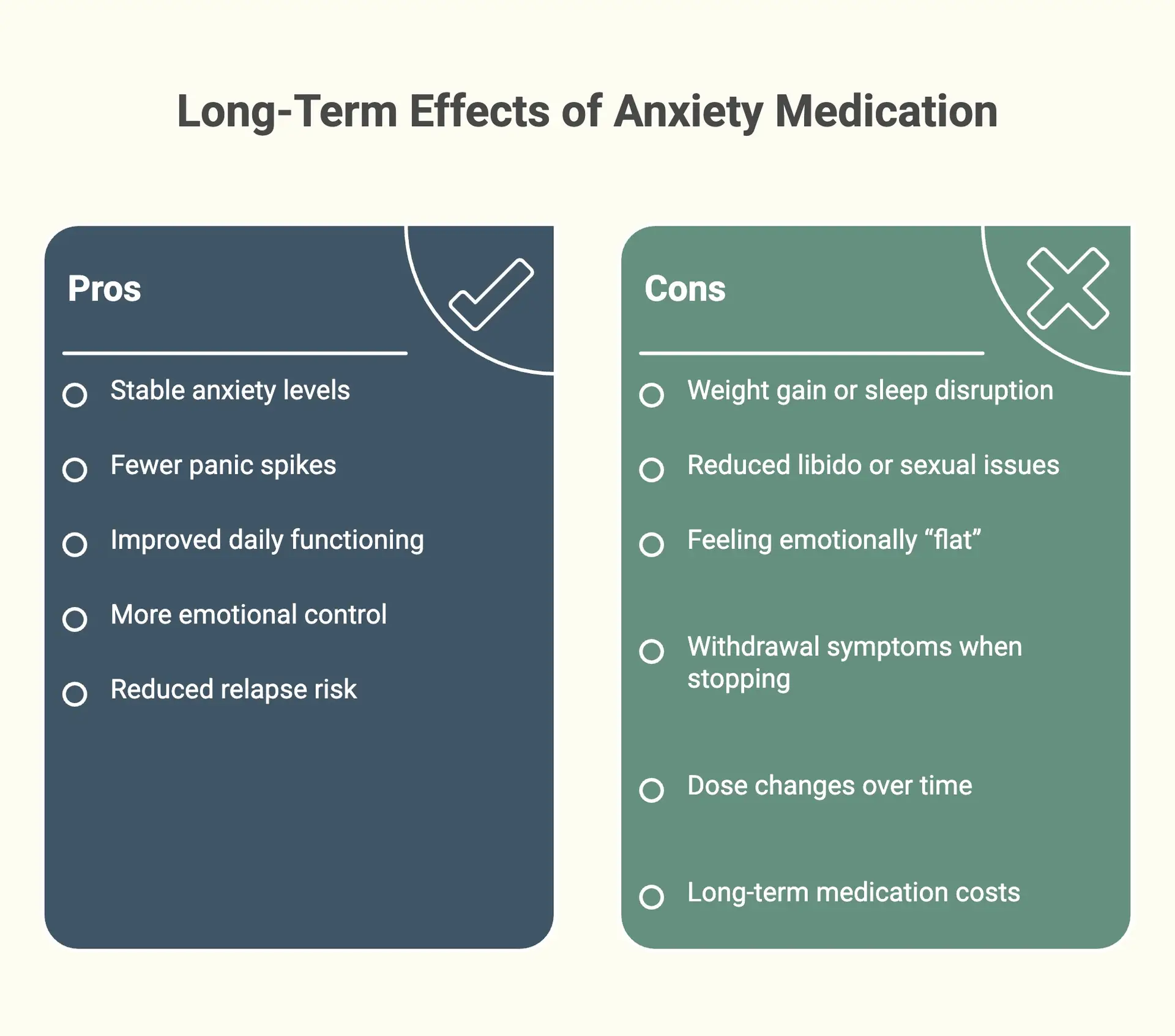
Long-term effects of anxiety medication include sustained symptom control, fewer anxiety spikes, and improved daily functioning with continued use. These changes reflect how treatment helps maintain stability over time, though ongoing support may still be needed.
With consistent use, anxiety becomes more predictable and less intense. Sudden spikes in panic or worry tend to occur less frequently, making it easier to manage daily responsibilities.
For some people, anxiety becomes minimal and less disruptive to daily life. Others may still notice a lower level of background worry, but with greater control over how they respond.
Medication is continued for a period after symptoms improve to reduce the chance of relapse. Stopping too early can lead to a return of symptoms, especially without additional support.
Some side effects can continue or appear with longer use, including weight changes, sexual side effects, or emotional blunting. These can be managed by adjusting the dose or changing medication with professional guidance.
Why therapy is suggested alongside medication for anxiety

Therapy is suggested alongside medication for anxiety because medication reduces symptoms, while therapy addresses the underlying causes and teaches long-term coping skills.
Medication helps reduce anxiety by regulating brain responses involved in fear, worry, and physical stress symptoms. This can make anxiety feel less intense and easier to manage in daily life, allowing for more consistent functioning.
Therapy, especially Cognitive Behavioral Therapy (CBT), focuses on identifying and changing the thought patterns and behaviors that keep anxiety going. It helps build skills to manage triggers, reduce avoidance, and respond more effectively to stress, even without ongoing medication.
Combining therapy and medication provides both short-term symptom relief and long-term improvement.
Benefits of anxiety therapy

Anxiety therapy helps reduce symptoms by building adaptive strategies, changing unhelpful thought patterns, and improving how you respond to stress over time.
Builds long-term coping skills
Therapy teaches practical strategies you can use in everyday situations, such as managing anxious thoughts, handling stress, and responding to triggers. These skills continue to work outside of sessions and do not depend on medication.
Changes unhelpful thought patterns
Anxiety is maintained by patterns like overthinking, worst-case thinking, or constant self-monitoring.
Therapy helps you recognize these patterns and shift how you interpret situations, which reduces how often and how intensely anxiety shows up.
Reduces avoidance behaviors
Avoiding situations that trigger anxiety can make symptoms stronger over time. Therapy helps you gradually face these situations in a controlled way, which retrains your response and reduces fear.
Improves emotional and physical regulation
Anxiety affects both the mind and body. Therapy helps you manage physical symptoms like tension or rapid breathing, while also improving how you respond emotionally to stress.
Supports long-term symptom reduction
Therapy focuses on creating lasting change by addressing the processes that drive anxiety. This helps reduce the likelihood of symptoms returning and supports more consistent stability over time.
Find an anxiety therapist today
Does anxiety go away with medication? Medication can reduce symptoms and make anxiety easier to manage, but lasting improvement involves learning how to respond to the patterns that keep anxiety going.
Working with a trained therapist can help you build practical skills, reduce triggers, and create more stable long-term progress. We offer telehealth services across Indiana and accept most insurance providers, making care more accessible and consistent.
If you’re ready to take the next step, get a free consultation to know the right approach for your needs.
Frequently Asked Questions
How do I know if I need anxiety medication?
Anxiety medication may be considered when symptoms are persistent, difficult to manage, or interfere with daily functioning. A clinical evaluation helps determine whether medication, therapy, or a combination is appropriate.
Can you fully recover from anxiety?
Anxiety is a natural emotion that cannot be completely eliminated, but recovery from anxiety disorders is possible with treatment that reduces symptoms and improves daily functioning.
How long should you stay on anxiety medication?
The duration of treatment varies based on symptom severity, history, and response to care. Decisions about continuing or stopping medication are usually reviewed regularly with a healthcare provider.
What happens if anxiety medication stops working?
If medication becomes less effective, options may include adjusting the dose, changing medications, or adding therapy. These changes are guided by a clinician based on symptom patterns and response.
Is therapy enough without anxiety medication?
Therapy alone can be effective for some individuals, depending on symptom severity and personal preference. In other cases, combining therapy with medication may provide additional support.