
Is it burnout if you are still performing well? It can be confusing when your performance looks fine, but your energy keeps dropping.
Learning how high achievers can recover from burnout is not pushing through or staying productive. It means recognizing when your capacity is already running low.
What matters most is what is happening underneath your output. You may still be meeting expectations, but if everything takes more effort and feels heavier, burnout may already be building.
Catching that shift early can change how you respond. This is why burnout often shows up this way.
Why burnout hits high achievers differently

Burnout hits high achievers differently because it often develops under the surface before showing clear signs. High achievers often carry pressure to maintain performance, which quietly splits focus and drains mental energy.
They can keep working even as energy and focus start to drop. This happens because the body stays in a stress-driven state, allowing output to continue for a while before capacity starts to decline.
Instead of slowing down, many respond by pushing harder. Tasks still get done, but they take more effort and take longer, sometimes doubling in time.
Because performance stays high on the outside, burnout can go unnoticed. The shift happens internally first, then shows up as exhaustion, reduced clarity, and a growing sense that work feels heavier than it should.
Signs burnout is already affecting you
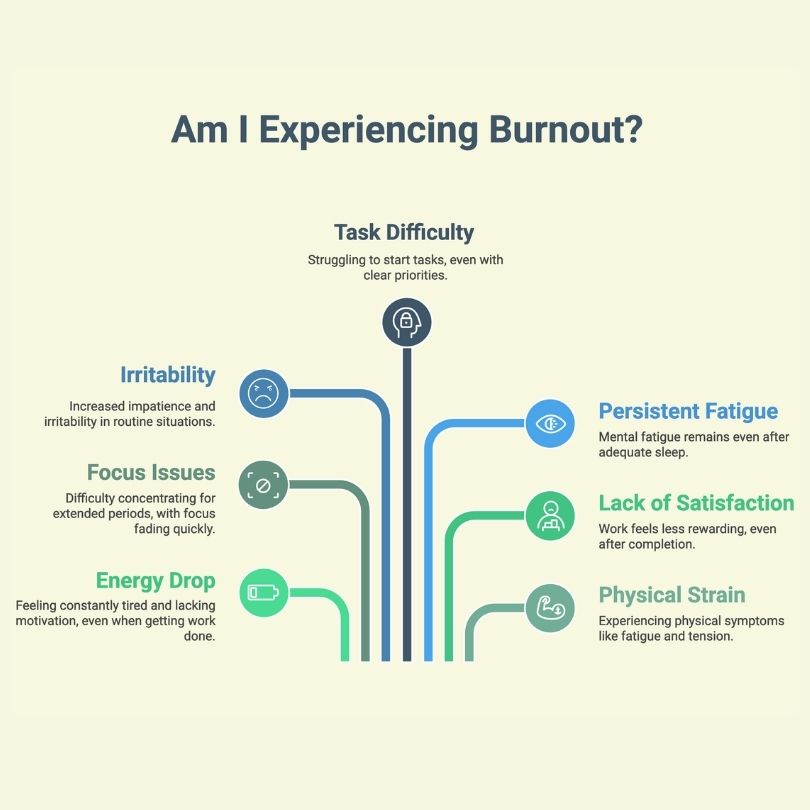
Burnout shows up as a drop in energy, focus, and emotional capacity, even when you are still getting work done.
It is different from short-term stress. Stress feels like too much to handle, while burnout feels like running low on energy, motivation, and care. The shift is gradual and often easy to overlook at first.
You may start to notice changes like:
- Tasks take longer than expected, sometimes 2 times the usual time
- Focus fades after 20 to 30 minutes instead of lasting 60 to 90 minutes
- You feel more irritable or have less patience in routine situations
- Starting tasks feels harder, even when priorities are clear
- Mental fatigue stays even after 7 to 8 hours of sleep
- Work feels less satisfying, even after completing it
- Ongoing physical strain, such as fatigue, tension, or disrupted sleep
What recovery actually requires

Recovery from high achiever burnout focuses on reducing load, rebuilding capacity, and changing patterns that maintain strain.
Lower the load before you push for motivation
Burnout does not improve by pushing harder. When demand stays high, energy continues to drop, even if you stay productive.
Start by reducing your workload where possible, limiting how many tasks you take on in a day, and pausing non-essential commitments. This creates space for your energy to recover instead of staying in constant output.
Rebuild recovery into your week
Recovery needs to be planned, not left to chance. Without it, the body stays in a prolonged stress state, which keeps fatigue high.
Build in consistent sleep of 7 to 9 hours, take short breaks every 60 to 90 minutes, and protect time with no cognitive demand. These changes help your system reset and improve focus over time.
Untangle self-worth from output
High achievers often tie their value to how much they produce, which makes it harder to slow down. This keeps the cycle going, even when capacity drops.
Start by noticing when you feel pressure to keep working and practice stopping at a “good enough” point. This reduces overwork and supports a more sustainable pace.
When burnout is tied to depression, anxiety, or ADHD

Burnout can overlap with depression, anxiety, or ADHD, which can make the exhaustion deeper and harder to recover from.
Burnout on its own is often linked to long periods of stress and may improve when demands are reduced. When depression is also present, the low energy and motivation can feel constant and may not improve much with rest.
Anxiety ties into burnout by keeping your system in a constant state of alert. Ongoing worry, pressure to perform, or overthinking increases mental load, which drains energy faster and makes it harder to recover, even during downtime.
With ADHD, burnout can come from the ongoing effort required to manage focus, organization, and daily responsibilities. This can lead to pushing hard for a period of time, then hitting a sharp drop in energy and focus.
When these conditions are present, recovery needs to address both the burnout and the underlying pattern. Reducing workload alone may not be enough, and structured support with a therapist can help stabilize energy, focus, and emotional regulation.
Find support before burnout gets worse
Getting support early helps prevent burnout from becoming harder to reverse and affecting more areas of your life.
High achiever burnout often builds gradually, which makes it easy to overlook until energy, focus, and motivation are already low. Speaking with a therapist can help you identify what is driving the pattern, reduce ongoing strain, and build more stable ways to manage work and recovery.
Clear support gives you structure, not just rest. It helps you adjust workload, improve focus, and restore energy in a way that lasts beyond short breaks or time off. To get started, you Get a Free 20-Minute Consultation.
Frequently asked questions
What are the signs of high achiever burnout?
High achiever burnout shows up as slower output, reduced focus, and ongoing mental fatigue despite continued work. You may notice tasks taking twice as long, difficulty starting work, and feeling drained even after 7 to 9 hours of sleep.
Why do high achievers miss burnout until it gets worse?
High achievers often miss burnout because performance stays high even as energy drops. Discipline and pressure to maintain output can mask early signs, allowing stress to build internally before it becomes visible.
Why do high achievers crash so hard when burnout hits?
High achievers crash harder because they push through early warning signs instead of slowing down. This builds up strain over time, leading to a sharper drop in energy, focus, and motivation once capacity is exceeded.
Can burnout be tied to depression, anxiety, or ADHD?
Burnout can overlap with depression, anxiety, or ADHD, which makes symptoms more persistent and harder to recover from. These conditions add ongoing mental load, making fatigue deeper and less responsive to rest alone.
What actually helps high achievers recover from burnout?
Recovery improves when you reduce workload, rebuild rest, and change patterns that drive overwork. Structured support and consistent adjustments to pacing help restore energy, focus, and long-term stability.