
There is no emergency. No argument. No looming deadline. Yet your body feels tense, your thoughts stay busy, and your system does not fully settle.
If you keep asking yourself, “why am I feeling anxious all the time?” the lack of a clear cause can feel deeply unsettling. When there is no visible trigger, anxiety often brings a second layer of distress and self-doubt about what might be wrong.
Persistent anxiety is not usually tied to one dramatic event. It often reflects patterns your nervous system has been holding for some time, even in ordinary situations.
At Sommer Psychology, this is one of the most common concerns clients bring into treatment. In this article, we’ll explain why anxiety can feel persistent even when nothing obvious is happening and outline what helps reduce that underlying tension.
Understanding Your Body’s Alarm System

Anxiety begins in the nervous system. It is designed to detect potential danger and prepare your body to respond.
When the brain interprets something as dangerous, it activates the body’s stress response, leading to increased heart rate, muscle tension, and altered breathing. In genuine danger, this response is adaptive and supports survival.
When anxiety feels constant, this system may activate in situations that are neutral or low risk. Subtle cues such as fatigue, caffeine, or minor uncertainty can trigger the same physical response as an actual threat.
This gap between physical sensations and actual threat helps explain why anxiety can persist. Building awareness of this pattern is an important step toward reducing it. With practice, the nervous system can learn to respond more proportionately and settle more reliably.
Common Everyday Triggers Hiding in Plain Sight
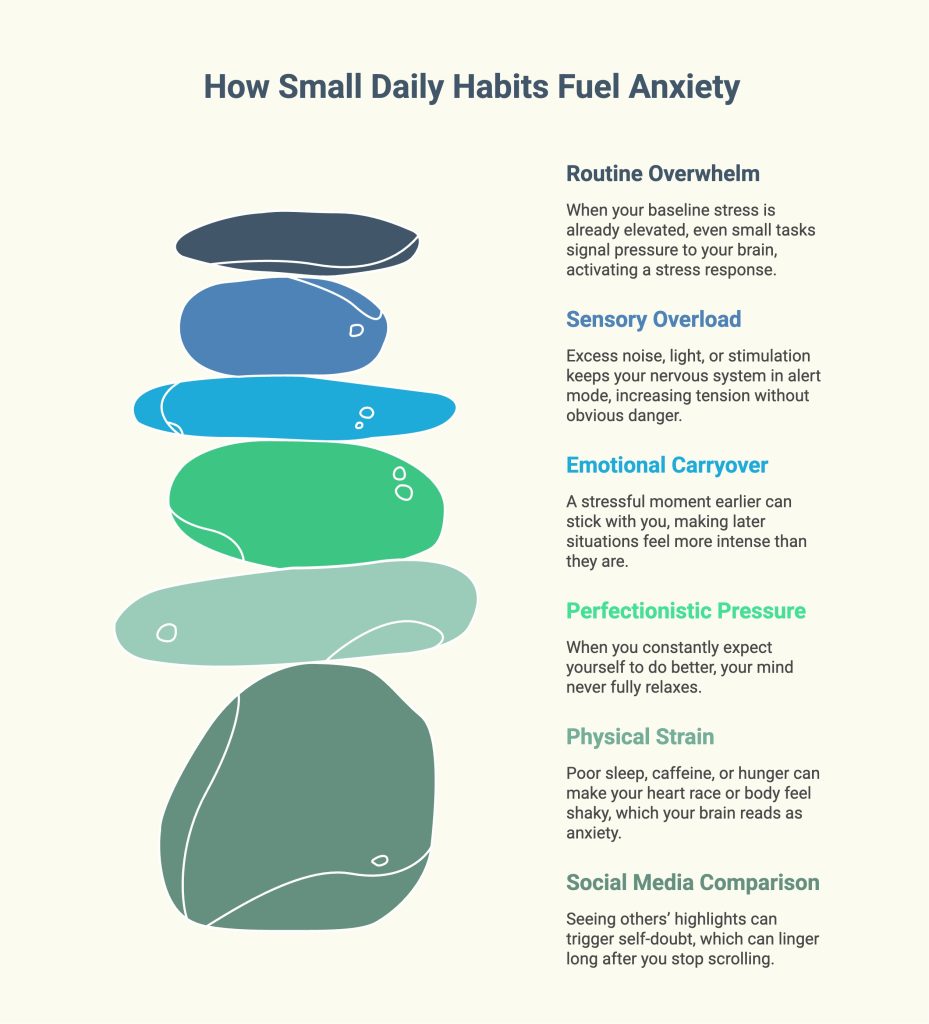
Anxiety does not always follow major life events. Often, it builds from small, repeated triggers that keep your body in a state of low-level tension.
These patterns can make you feel anxious even during calm periods, especially when the source is subtle or habitual:
- Social media comparison: Brief scrolling can shift into comparison or negative self-evaluation that lingers longer than expected.
- Physical strain: Caffeine, poor sleep, dehydration, or hunger can create sensations that feel like anxiety.
- Perfectionistic pressure: Ongoing internal expectations to perform or “get it right” can keep stress elevated, even without external conflict.
- Emotional carryover: A tense interaction or unresolved concern from earlier in the day can quietly influence your mood hours later.
- Sensory overload: Noise, bright lights, or crowded environments can heighten alertness without you fully noticing it.
- Routine overwhelm: Everyday tasks can feel disproportionately heavy when your stress level is already elevated.
These triggers often operate in the background. Identifying them is a practical step toward reducing the steady undercurrent of anxiety.
High-Functioning Anxiety: When You Seem Fine but Feel Tense

High-functioning anxiety describes a pattern where you continue meeting responsibilities and performing well, while internally feeling persistent tension or pressure. You may appear capable and composed, yet rarely feel fully settled.
On the outside, life looks stable. On the inside, your thoughts may stay busy, and your body may remain slightly on edge.
Common signs include:
- Racing thoughts during quiet moments: Anxiety may surface when there is space to think.
- Persistent physical tension: Tightness in the chest, shallow breathing, or restlessness without a clear trigger.
- Perfectionistic standards: Ongoing pressure to perform well, even when outcomes are positive.
- Disproportionate worry about small tasks: Routine calls or minor risks may feel larger than they objectively are.
This internal–external mismatch can make anxiety harder to recognize. You may function well while still feeling chronically on edge.
Ways to Reduce Ongoing Anxiety

When anxiety feels constant, short daily practices can help lower baseline tension. If you are looking for how to stop feeling anxious for no reason, these strategies offer practical starting points. They are simple, structured, and most effective when practiced consistently.
Quick Daily Resets
- 4-7-8 Breathing: Inhale through your nose for four counts, hold for seven, and exhale slowly for eight. Slowing the breath helps reduce heart rate and calm physical activation.
- 5-4-3-2-1 Grounding: Name five things you see, four you feel, three you hear, two you smell, and one you taste. This shifts attention from internal worry to the present environment.
- Digital Boundaries: Reducing late-night scrolling or limiting media exposure can lower overstimulation that fuels background tension.
- Gentle Movement: A short walk without distractions helps discharge stress and regulate energy levels.
Practicing even one of these consistently can begin lowering daily reactivity.
Evidence-Based Therapy
For persistent anxiety, structured therapy can help address the factors that keep symptoms active. Treatment focuses on identifying patterns that sustain worry and strengthening skills that support steadier regulation.
- Cognitive Behavioral Therapy (CBT): Helps identify and shift anxious thought patterns while reducing avoidance behaviors.
- Trauma-Informed Treatment: Addresses earlier experiences that may be contributing to ongoing vigilance.
- Insight-Oriented Therapy: Builds awareness of recurring emotional and relational patterns that maintain anxiety.
Therapy is tailored to individual presentation. The focus is not only symptom reduction, but restoring steadiness over time.
If anxiety continues to feel constant, reaching out for structured support can be an appropriate next step.
When to Seek Additional Support

Daily regulation strategies can be helpful, but sometimes, anxiety requires more structured care. Consider seeking support if symptoms are interfering with sleep, concentration, work performance, or relationships.
Persistent physical symptoms such as fatigue, muscle tension, or ongoing restlessness are also important signals.
If anxiety has been present for several months without meaningful improvement, a professional evaluation can provide clarity and direction. It is also appropriate to consult a primary care provider to rule out medical factors such as thyroid imbalance or cardiac concerns that may contribute to similar symptoms.
Therapy can then address the emotional and cognitive patterns maintaining anxiety. Seeking support is not a sign of weakness. It is a practical step toward restoring stability.
From Constant Tension to Steadier Ground
If you have been asking yourself why am I feeling anxious all the time, the persistence of that question often signals that something deeper is maintaining the tension. Anxiety that feels constant usually has identifiable patterns behind it, even when those patterns are not immediately obvious.
With the right support, those patterns can shift. Small changes in awareness, daily regulation, and structured therapy can gradually reduce the intensity of anxiety and restore a steadier baseline.
If this experience feels familiar, you do not have to navigate it alone. Contact us today to begin a thoughtful, personalized approach to care.
Frequently Asked Questions
Why do I feel anxious even when nothing stressful is happening?
Anxiety can persist without a visible trigger because your stress response may remain slightly activated in the background. Subtle factors such as accumulated stress, sleep disruption, or learned vigilance patterns can maintain tension. The absence of a crisis does not mean your body has fully returned to baseline.
Can anxiety be constant without panic attacks?
Yes. Anxiety does not need to escalate into panic attacks to be significant. Many people experience steady, low-level tension, restlessness, or racing thoughts without dramatic spikes. This persistent form of anxiety can still interfere with concentration, sleep, and overall well-being, even if outward functioning remains intact.
Is it normal to feel anxious for no clear reason?
It is common, but not random. Anxiety often reflects patterns shaped by stress history, internal pressure, or habitual worry. Even when life appears stable, the body may continue scanning for potential problems. Identifying these patterns helps explain why anxiety can feel disconnected from current circumstances.
When should I seek help for ongoing anxiety?
Consider professional support if anxiety disrupts sleep, relationships, work performance, or daily routines. Persistent physical symptoms such as muscle tension, fatigue, or difficulty relaxing are also important indicators. If symptoms continue for several months without improvement, structured evaluation and treatment may be beneficial.
Can lifestyle changes reduce constant anxiety?
Lifestyle adjustments can lower baseline stress levels and support regulation. Consistent sleep, moderate exercise, reduced caffeine, and structured routines often help stabilize mood and physical tension. While these strategies may not eliminate anxiety entirely, they create conditions that make therapeutic work more effective.